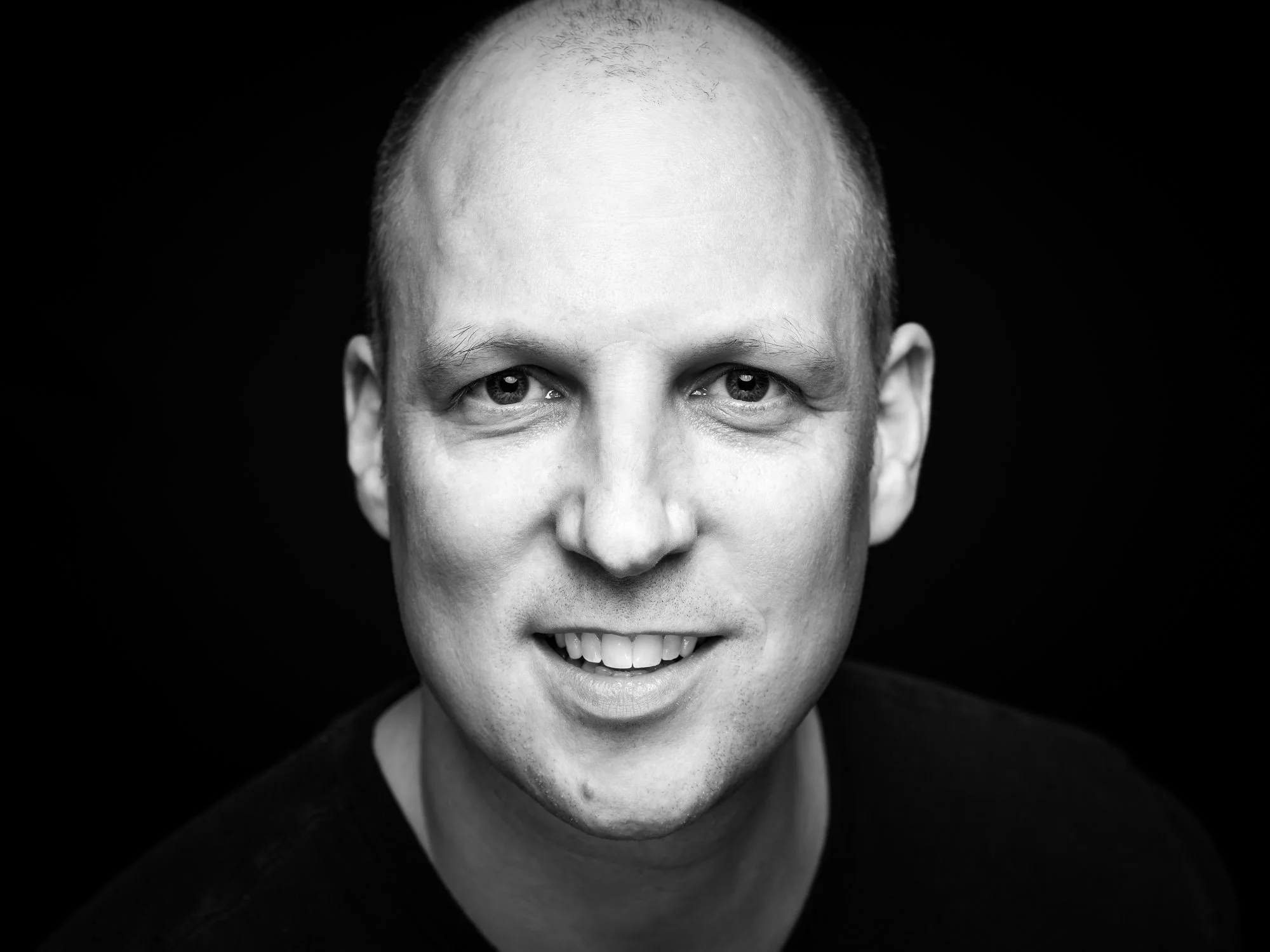
"Have you already built it openly?"

No one in the construction industry is interested in climate change. That's why we're turning building with natural materials into a business case.

Offer for institutional investors
Offer for private investors

OPENLY Manifesto by Andy Keel

Groundbreaker
Building better ways to build
LinkedIN / andy.keel@openly.systems

Graham Bell did not conduct market research before inventing the telephone. Neither did Enzo, who created the first Ferrari in 1945 in a Nazi grinding machine workshop in Maranello, or Steve Jobs, who created the Macintosh in his parents' garage in 1984.

Today, we build incorrectly and poorly.

“Stupidity makes itself invisible by assuming enormous proportions.” -Bertold Brecht

My motivation was to prove that it is technically possible today to construct a zero-emission building with net-zero gray energy (CO2). Just like that.

“Every change started somewhere” - 2022 Andy Keel

I have always compared the pioneering work in the planning process and implementation to a Tour de France team. We want to win the overall classification, the individual time trial, and a mountain stage. Many fell by the wayside during the Valley Widnau pilot project. We worked day and night with a team of over 20 specialist planners, thinking, changing, and inventing. Between 2022 and 2024, we not only reimagined building with natural materials, but also the construction process itself. That's why we call Openly a building system.

Openly is ushering in a new generation of buildings. Openly buildings are better, healthier, more efficient (plus-energy), renewable, adaptable, quicker to plan and build, recyclable, safer, and offer long-term returns. The family-run corporations Leipfinger-Bader (DE) and VICAT (FR) are so far the only ones that can credibly demonstrate their path to net zero and back it up with actions (products).

2) Why build differently?

25% of global annual CO2 emissions come from the construction industry. That is around eight times as much as all air traffic. We need to understand the world as a closed cycle and not waste resources, but use them in such a way that we can reuse them again and again. In the past, it was clear to everyone that an Appenzell house left (almost) no waste behind. I myself grew up in a wooden house that was over 100 years old.

The Openly Vision: Buildings as a carbon sink

Office and residential buildings should be transformed from carbon emitters to carbon sinks. To date, no one has developed a commercially scalable construction system that focuses on carbon capture and storage. Our construction system does just that, making it possible to store up to 0.25 tons of CO2 per square meter of gross floor area. We need to put the CO2 we emit back underground and into buildings—that's how we'll solve climate change (along with avoiding emissions in transportation and industry). The technologies for doing this are called pyrolysis and photosynthesis. Unfortunately, very few scientists, politicians, board members, and lobby groups such as SIA, DGNB, etc. have noticed this yet, or they get bogged down in detailed discussions. With the Global Construction C-Sink Standard, we ourselves have created the accounting logic for these removals together with CSI and the Ithaka Institute, which will be applied under the EU's CRCF. The first TAP has just been published at a leisurely pace. With myclimate.org, a pilot project is underway for at least 10,000 tons of removals (corresponding to the cumulative sink performance of Neustark and Climeworks to date). The potential of buildings as a carbon sink is around 5 gigatons per year. Let that sink in.

3) What can you do?
Build differently. Use renewable and recyclable building materials and construction methods. With or without Openly, we don't have a monopoly on wisdom.

4) The Why is missing:
The profit-oriented Openly AG (holding company) is privately owned without venture capital investors. The pilot project was financed and built through condominium ownership (13 million, 19 apartments). Our motivation has always been to make an impact and build differently – not to create a unicorn startup or secure an income in the lucrative real estate sector so that we could afford a yacht at some point. That's why Openly never had a pitch deck (but it did have a detailed cost and liquidity plan). It was only after the pilot project was completed in the summer of 2024 that we started looking at the future business model. By 2026, we had already reached break-even on our own.

Our strategy is to grow rapidly across Europe through partnerships and collaborations (hence the name Openly). Our short-term goal is to create 500 apartments over the next three years.

More than ten years ago, Baumschlager Eberle Architects set a striking benchmark with the 2226 building, located less than 10 kilometers from Openly Valley Widnau. The building demonstrated that consistent building physics can reduce building technology to a minimum. It was precisely this approach that triggered the decision to develop the pilot project together with them.

At one crucial point, however, old and new systems of thought collided unexpectedly:

“You are solving a problem* that does not exist.” - Dietmar Eberle 2023

As long as climate change is not seen as a problem, there is no reason to change anything in the construction industry and architecture. In this sense, MAC 1984 and OPENLY 2022 were pointless, and the construction industry remains the same:

“The elephant in the climate room” - Prof. Schellnhuber (listen to the podcast here)

What is touted as sustainable in the construction industry today often crosses the line into ridiculousness. Institutional investors for sustainable real estate projects are much rarer in practice than in presentations. In reality, returns take precedence over all other criteria. This was confirmed by VoC discussions with over 100 institutional investors.

ESG reduction paths are often limited to portfolio adjustments and the replacement of fossil fuel heating systems. Profound renovations remain rare. In Switzerland, over a million buildings are still heated with fossil fuels, and the renovation rate for multi-family homes is around 1% (i.e., 100 years).

“There are no brave old people in construction” - Andy Keel

...which is why, for the time being, we are the friendly pirates of the construction industry. That doesn't mean we hijack ships or launch stupid youth or climate activism campaigns. We have freedom because we don't have to follow startup logic and we're not beholden to any lobby. Growth can happen, but it doesn't have to. We're not driven by greed or an exit strategy.

5) The Openly Business Model:

We have carefully chosen our business model by specializing in the certification of C sinks and in project development and/or implementation as a full-service provider (general planner) (our services here), but without setting up any production or manufacturing lines ourselves, thus keeping fixed costs to a minimum and maximizing scaling potential. We do not operate within the submissive mechanics of classic architecture competitions, which are in fact exploitative instruments of real estate developers, especially in residential construction with maximum density and maximum square meters of main usable space.

We see ourselves as an alternative to the two German construction system unicorns Gropyus and Nokera with their gigafactories. Factories—and their fixed costs—are not necessary, especially in an industry that has been trying to operate with 0-3% EBIT for decades and is notoriously weak in innovation. The cost advantages (or cost neutrality) of the Openly construction system arise from a new planning and construction process, the standardization of components, and economies of scale in purchasing. Exciting developments in this context include the Spanish startup 011H (with a Swiss VC investor), Kaufmann Bausysteme from the Bregenzerwald (less than a 30-minute drive from us), and Haering in Switzerland.

Openly Holding owns various patents, the milton.earth brand as a CO2 trader, Valley Architekten AG, and a stake in Cancret AG in the hempcrete sector (with initial industry partnerships and start-up funding). Another spin-off for Openly Airbox AG, including plug & play control, is being planned together with Cleverson and Huber Fenster AG. We recently received Minergie P certification for the Airbox as a controlled (low-tech) residential ventilation system.

In conclusion:
We are intensively engaged with AI in the planning process, because building with a system is designed to implode the planning cycles. This is when the guild of architects must be held accountable. The efficiency and climate debate has largely bypassed them. However, it is the architects (and today's stars) who are responsible for CO2-intensive building materials, not the building materials industry.

A new era is beginning. At some point.

Openly.

“Not all problems can be solved with yoga” - January 31, 2026 Andy Keel

Valley Widnau guided tours every last Thursday (more than 1,500 professionals have already visited us)

Listen to the whole story and vision of Openly in the uncut 75-minute podcast from Baden-Württemberg Podcast from Baden-Württemberg

Special thanks go to the five Spirig heirs, especially Titus Spirig, who provided the building land for the Valley Widnau pilot project at market prices and always believed in the Openly vision.

Impact of the OPENLY building system

Our goal by the end of 2028: 500 apartments (units) under construction

  • Avoided emissions: 30,000 tons

  • Captured CO2: 20,000 tons

🎙️ NEST podcast SPOTIFY
"You can't win if you're not completely different. If everyone else is calling us completely crazy, then I say to myself, we must really be onto something."
- Larry D. Ellison
"We cannot solve our problems with the same thinking we used when we created them"
- Albert Einstein

Openly Valley Widnau 2024 – Europe's largest hemp house