
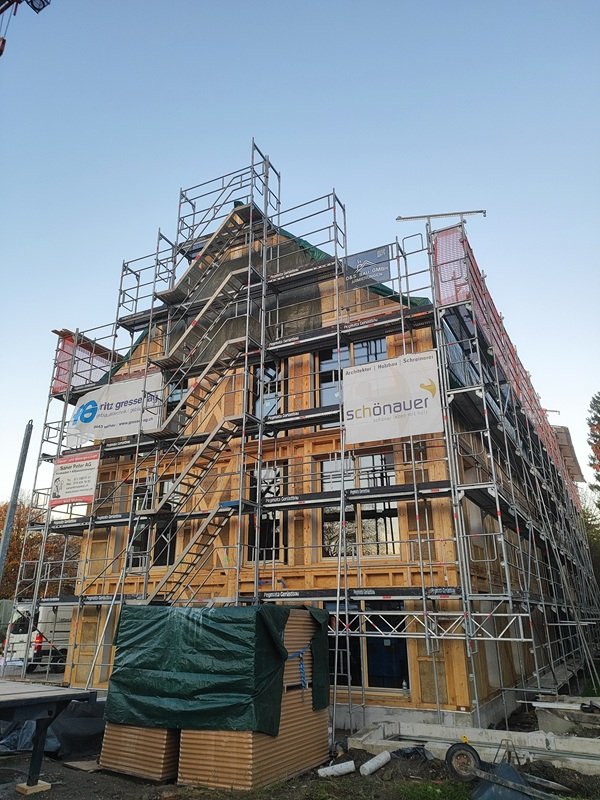
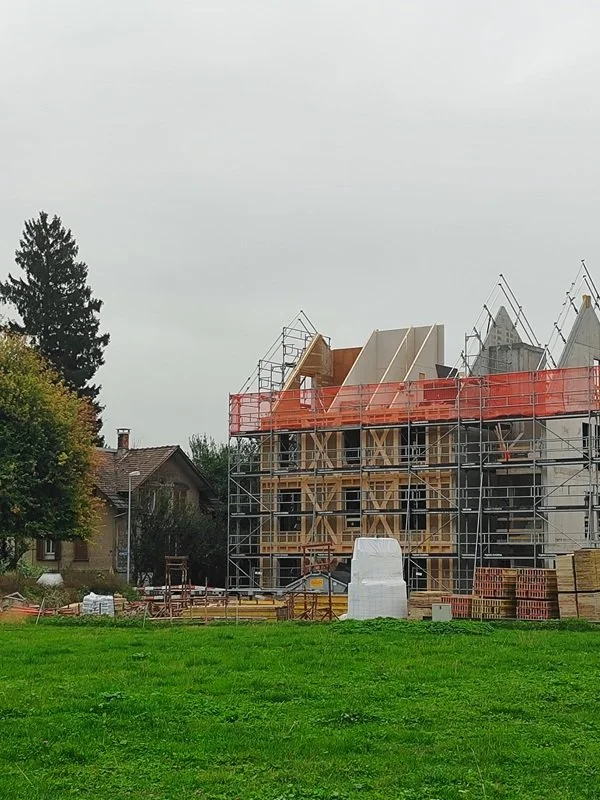
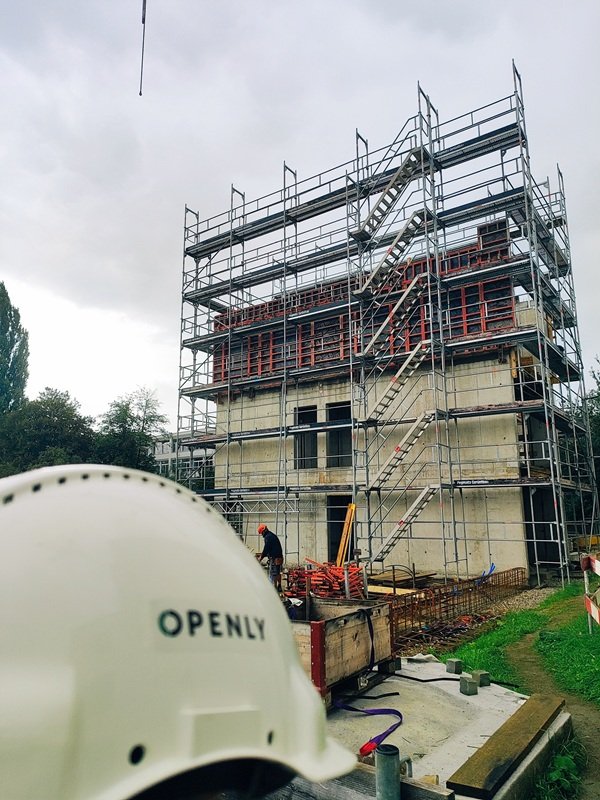
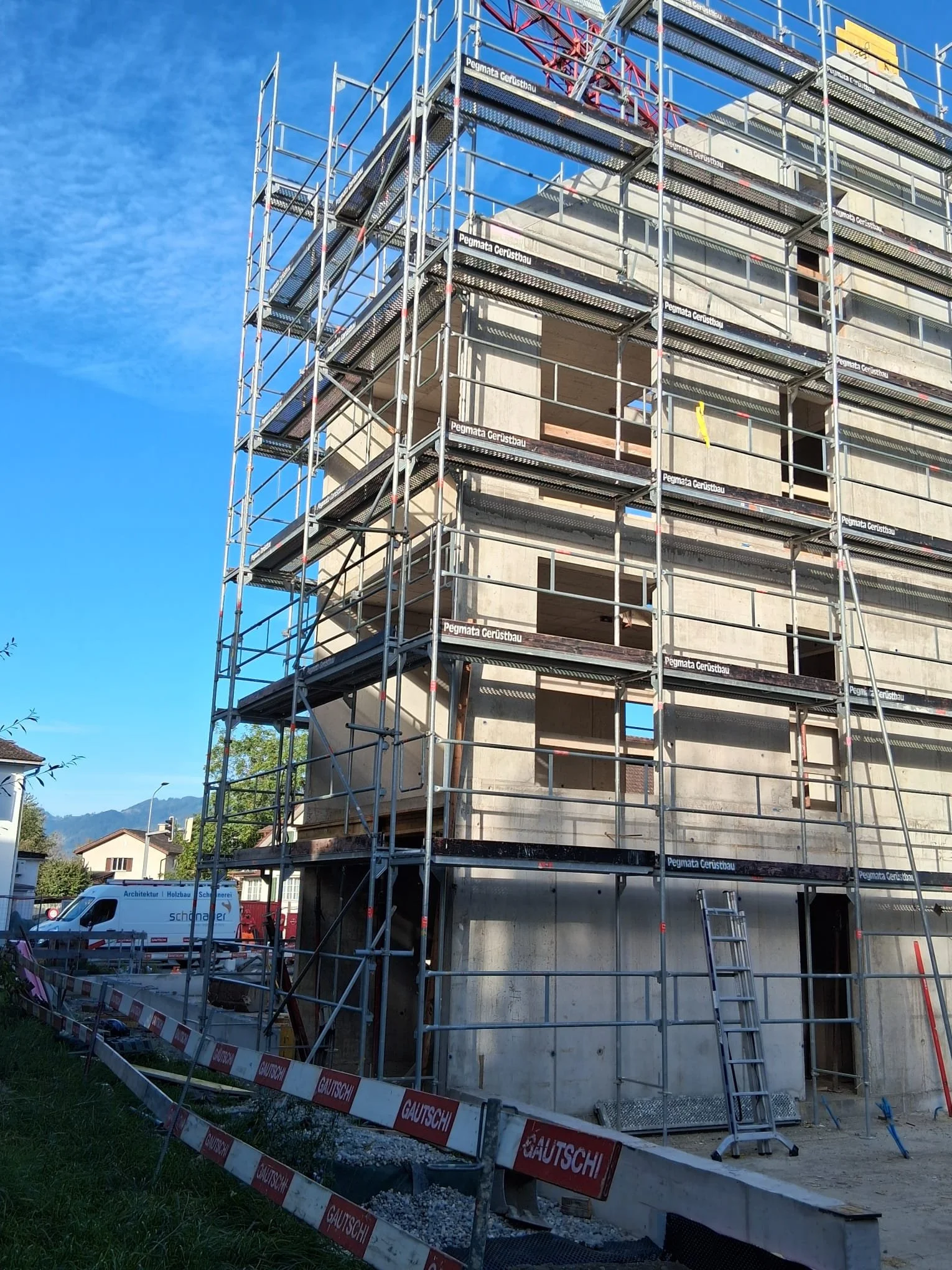
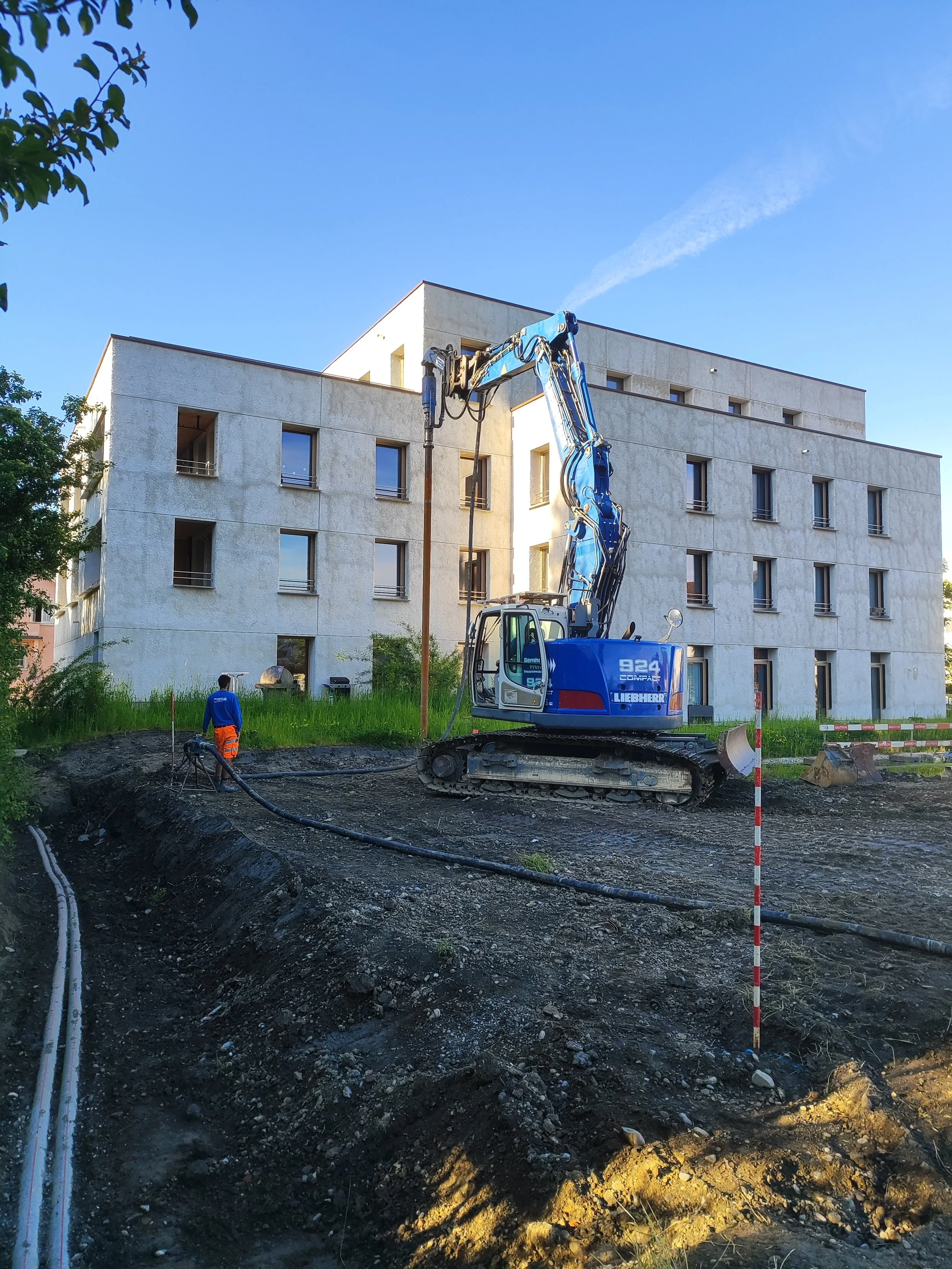
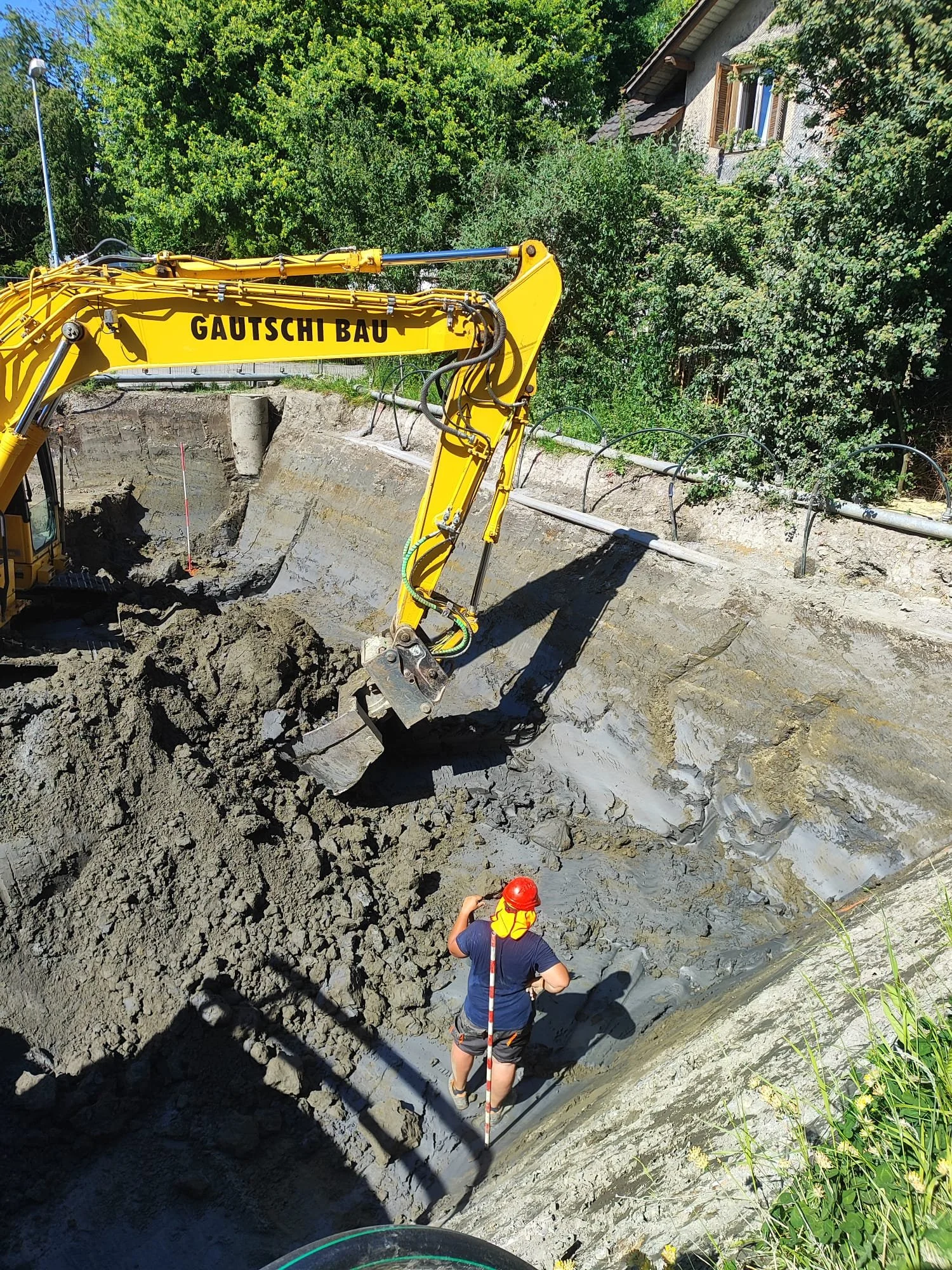
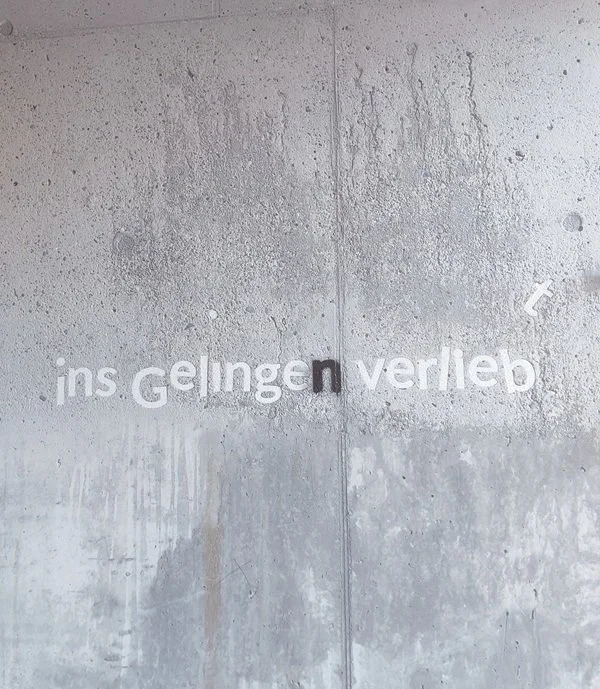
-10° in winter, +40° in summer
The Openly Valley Widnau Stage 2 is dedicated to climate resilience.
Further developments:
Nighttime cooling: Airbox 2.0 (Minergie P)
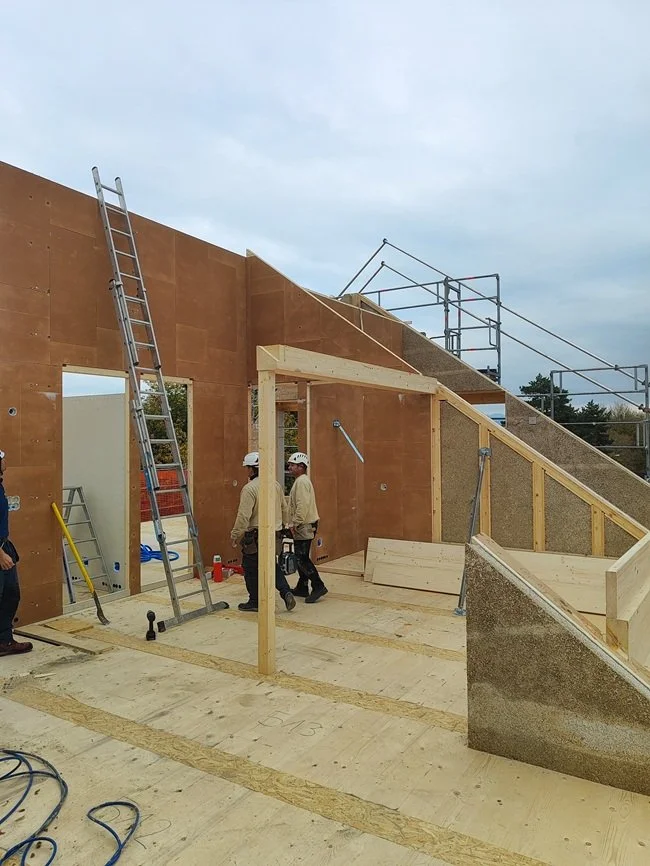
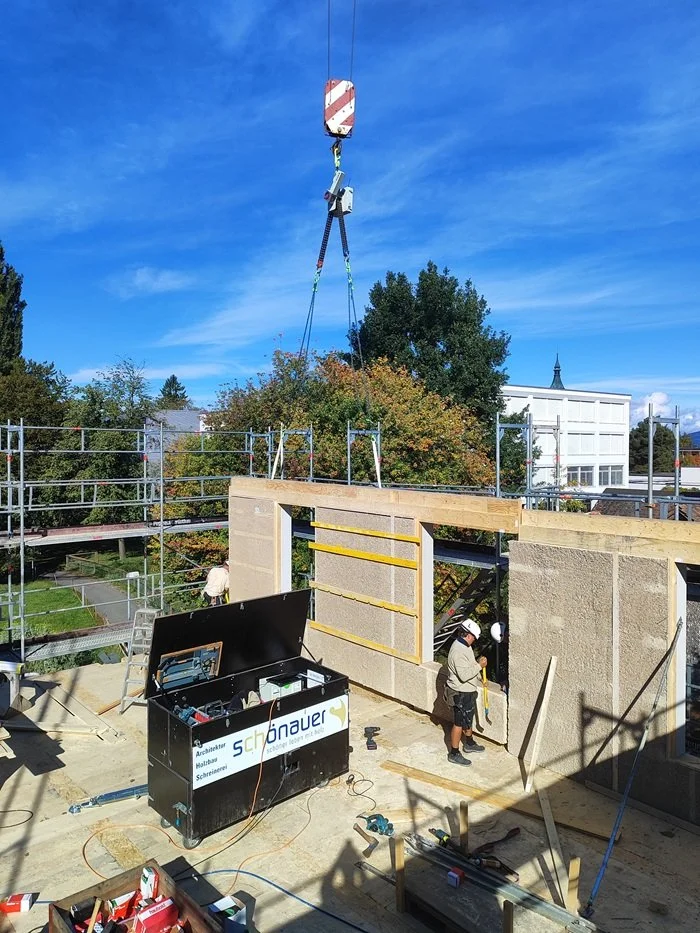
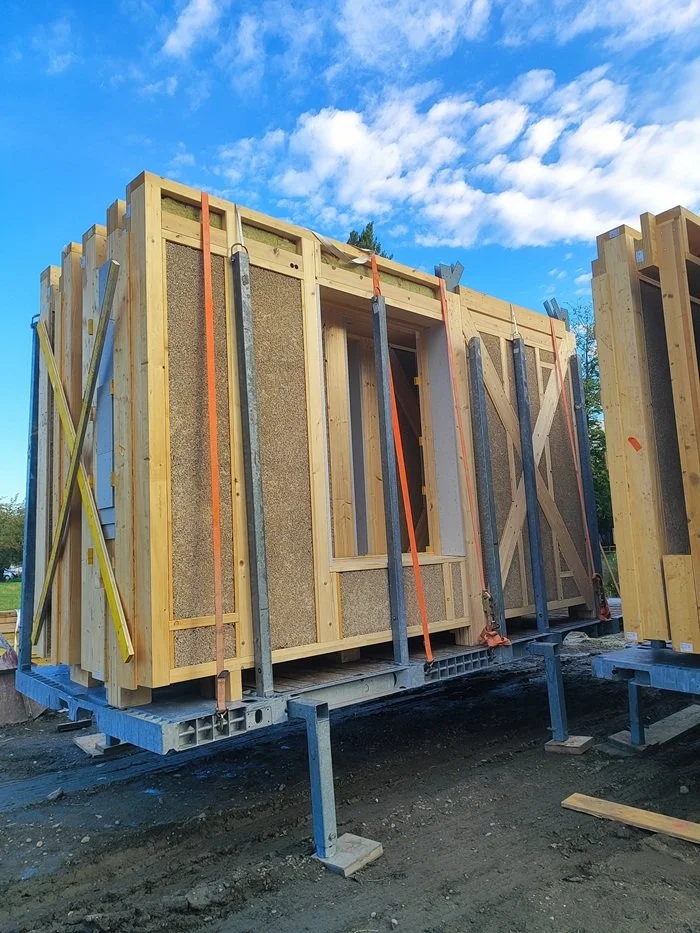
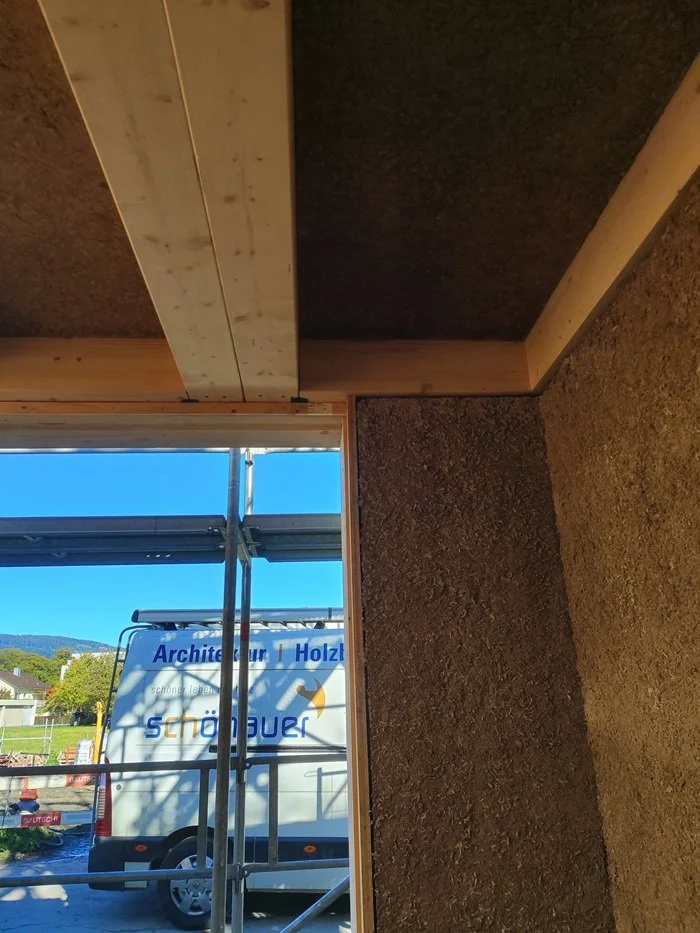
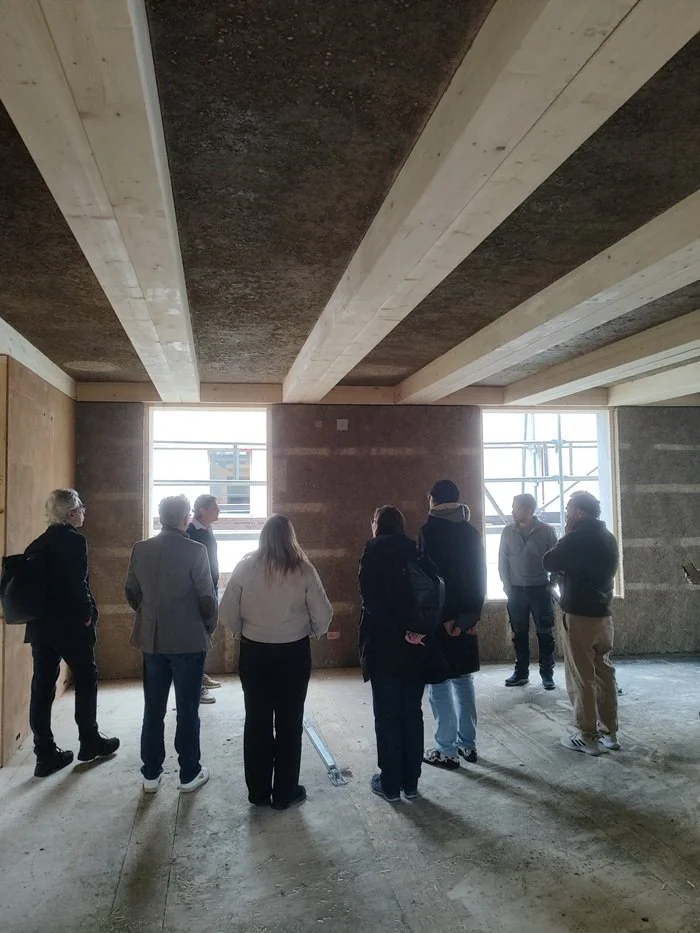
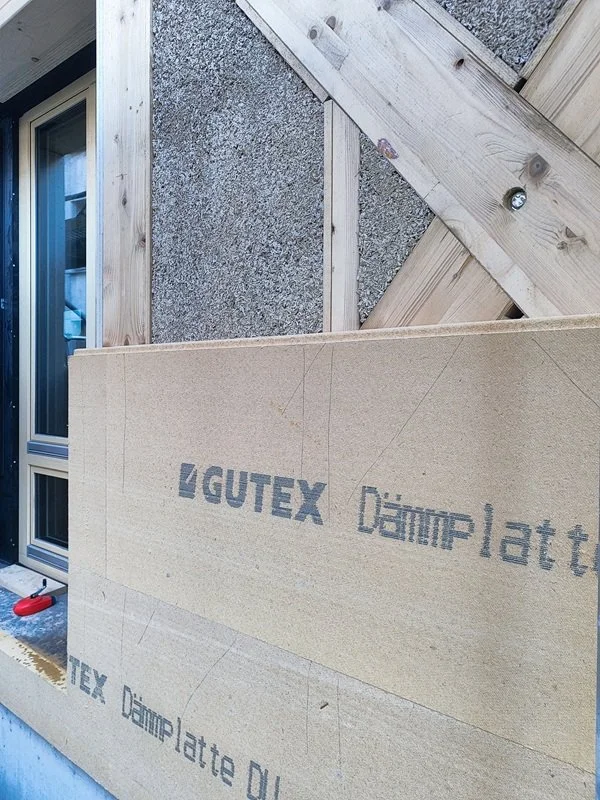
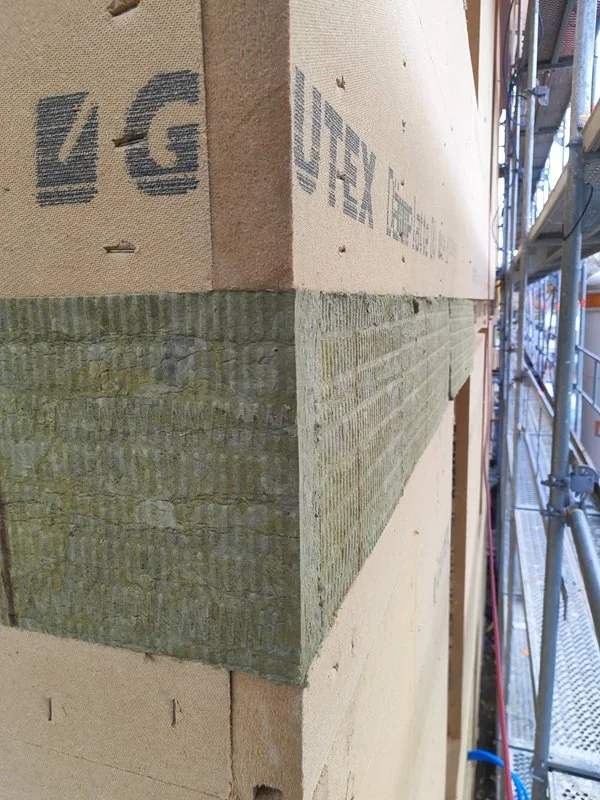
More affordable, quieter, and—above all—plug-and-play. No local installation or electrical design planning required.Hemp-lime: U-value of 0.15 (Minergie P):
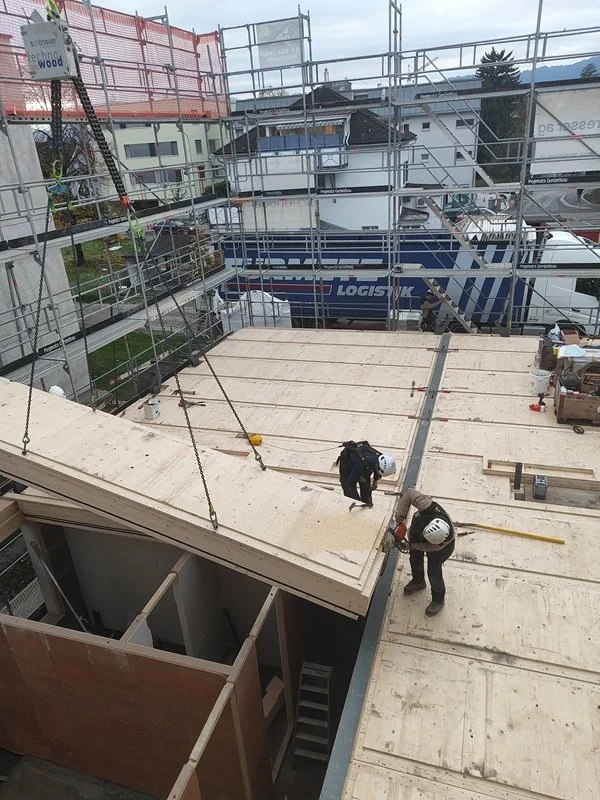
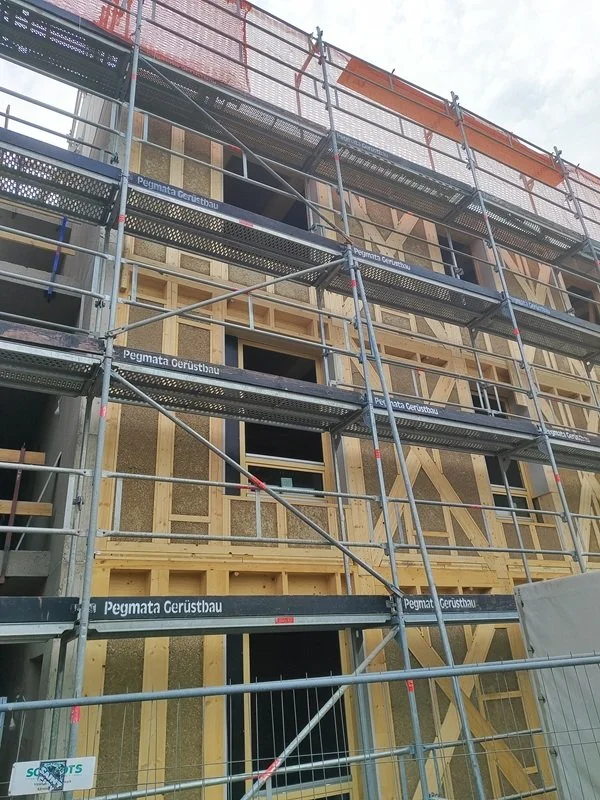
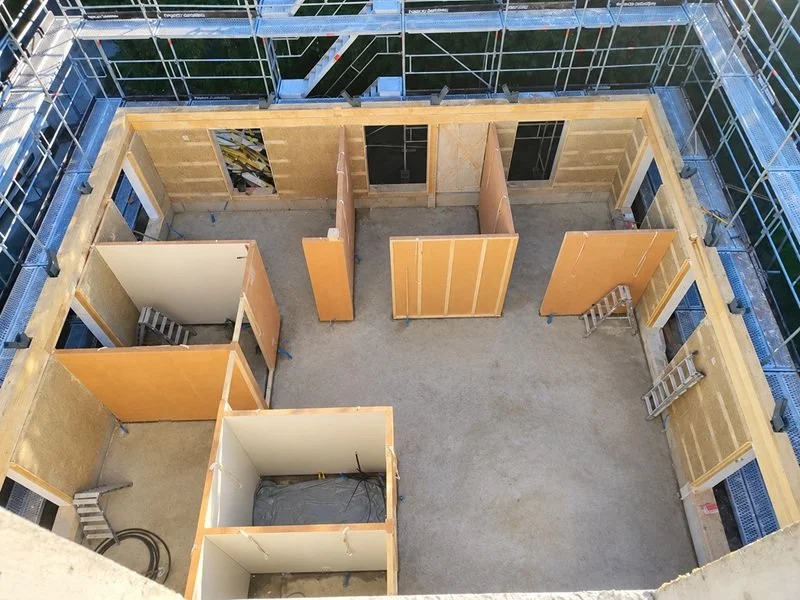
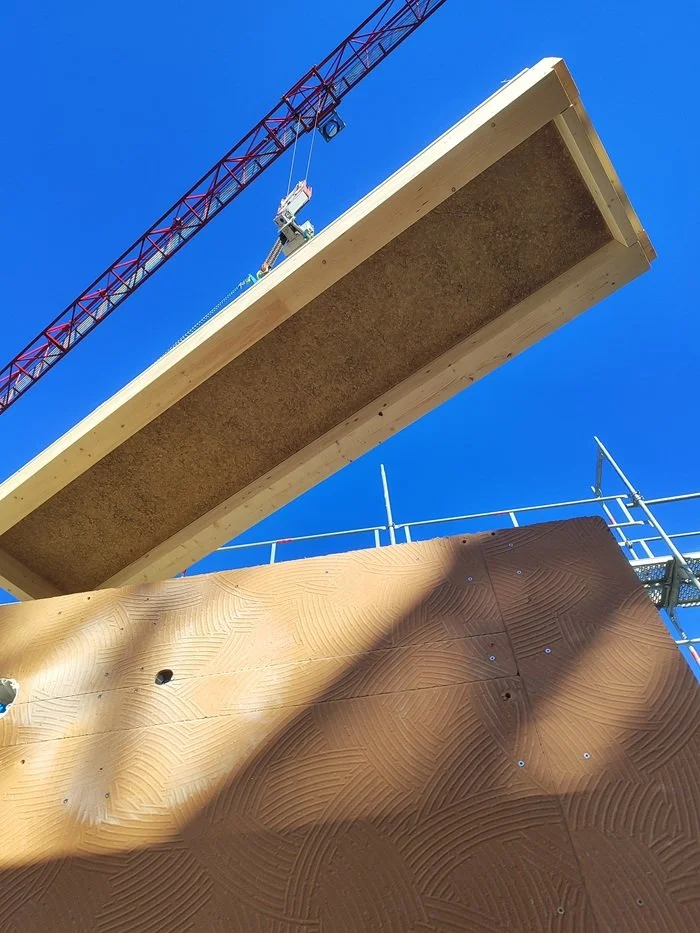
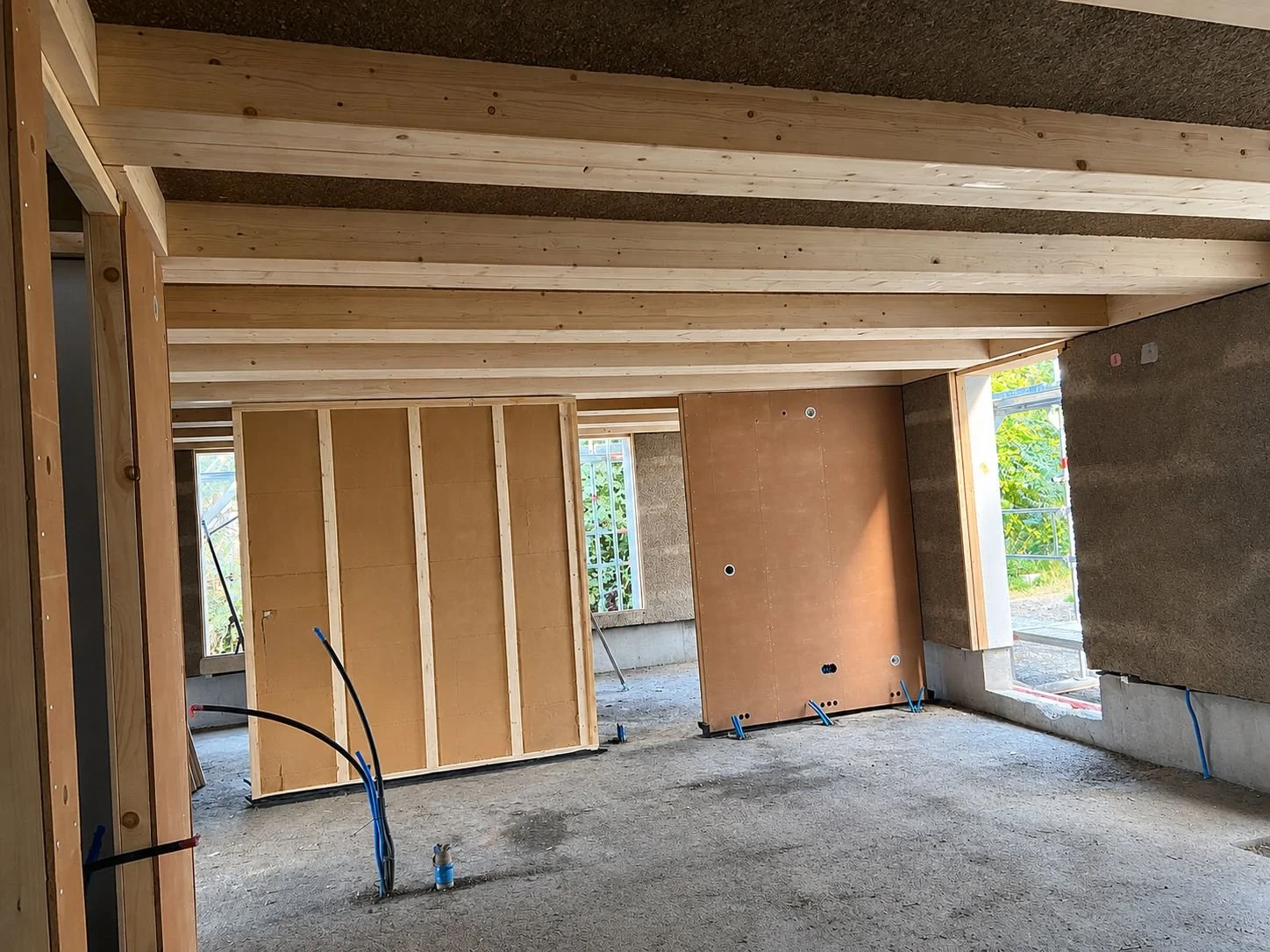
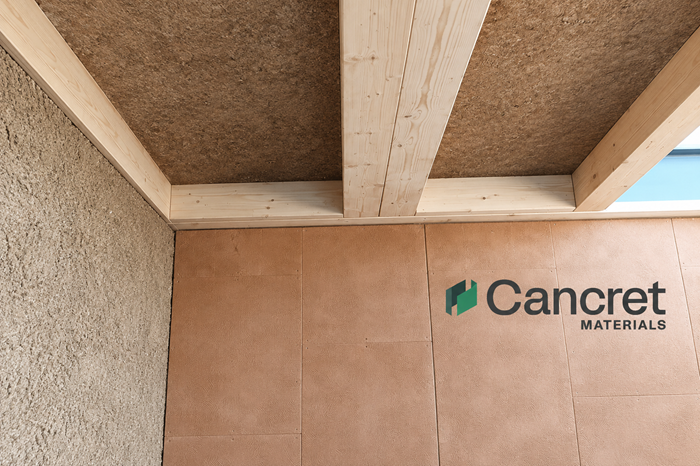
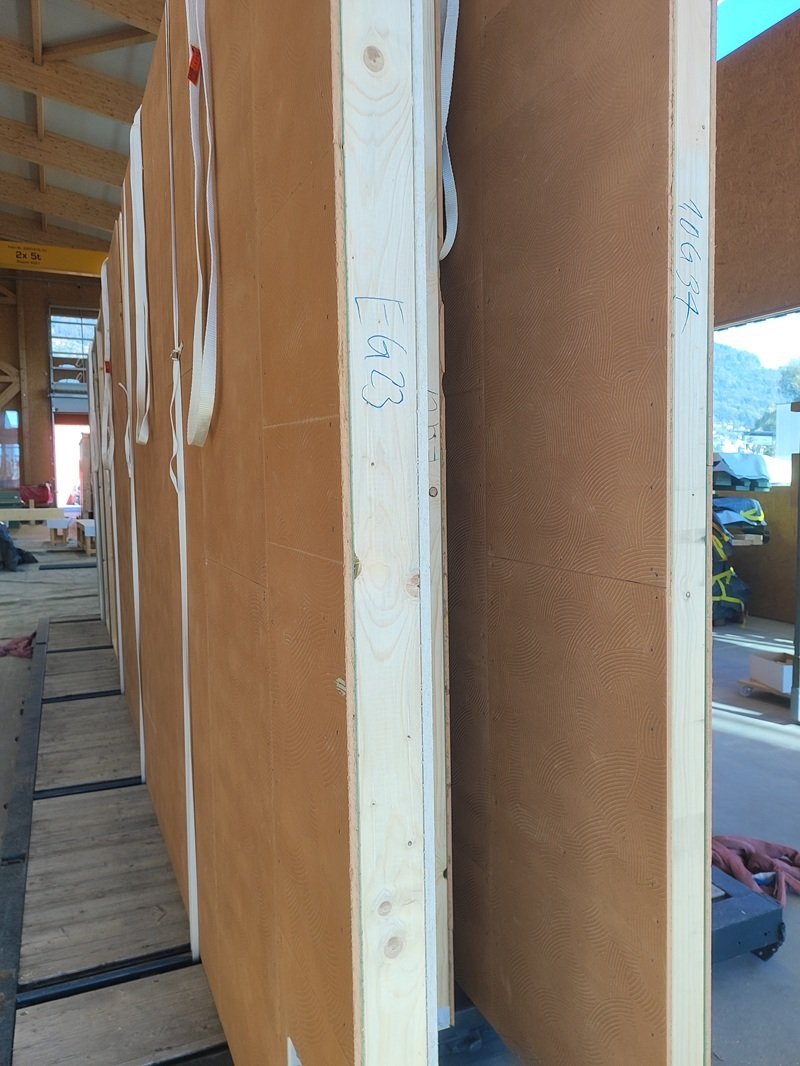
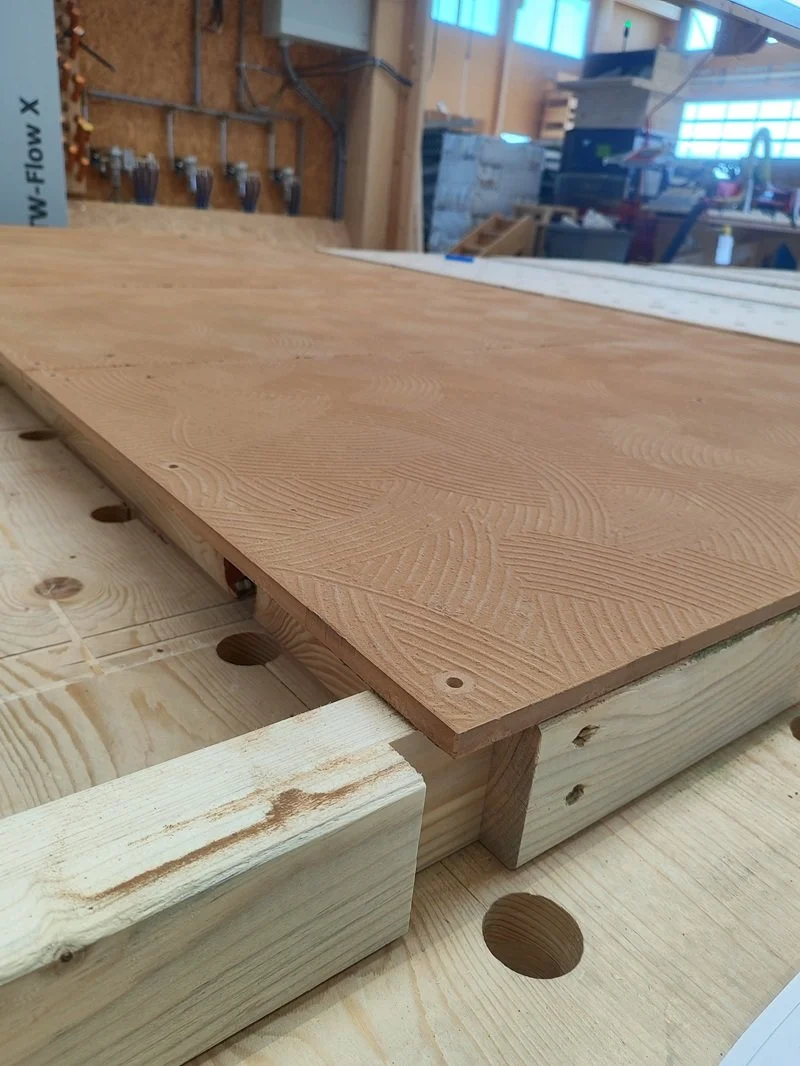
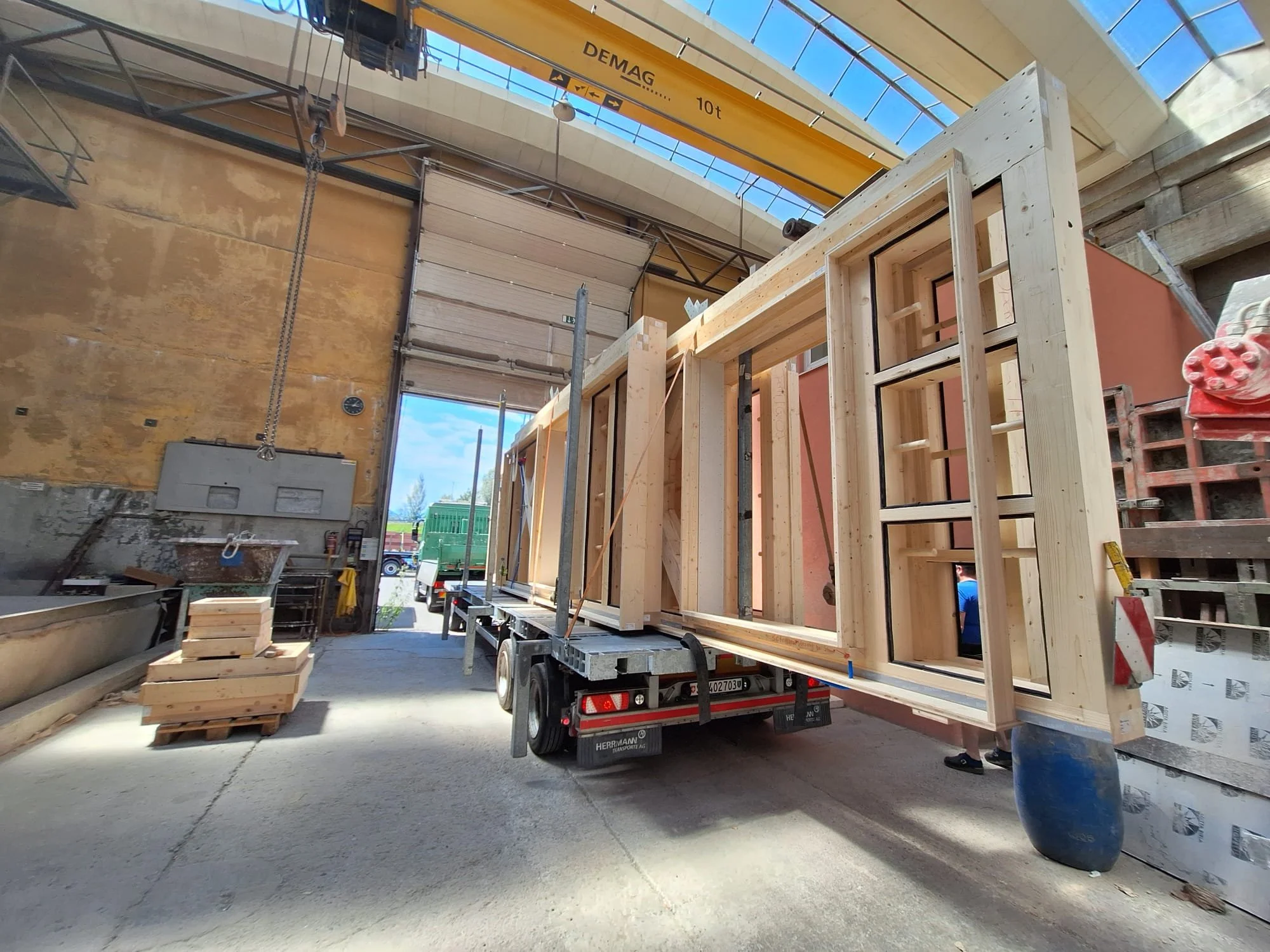
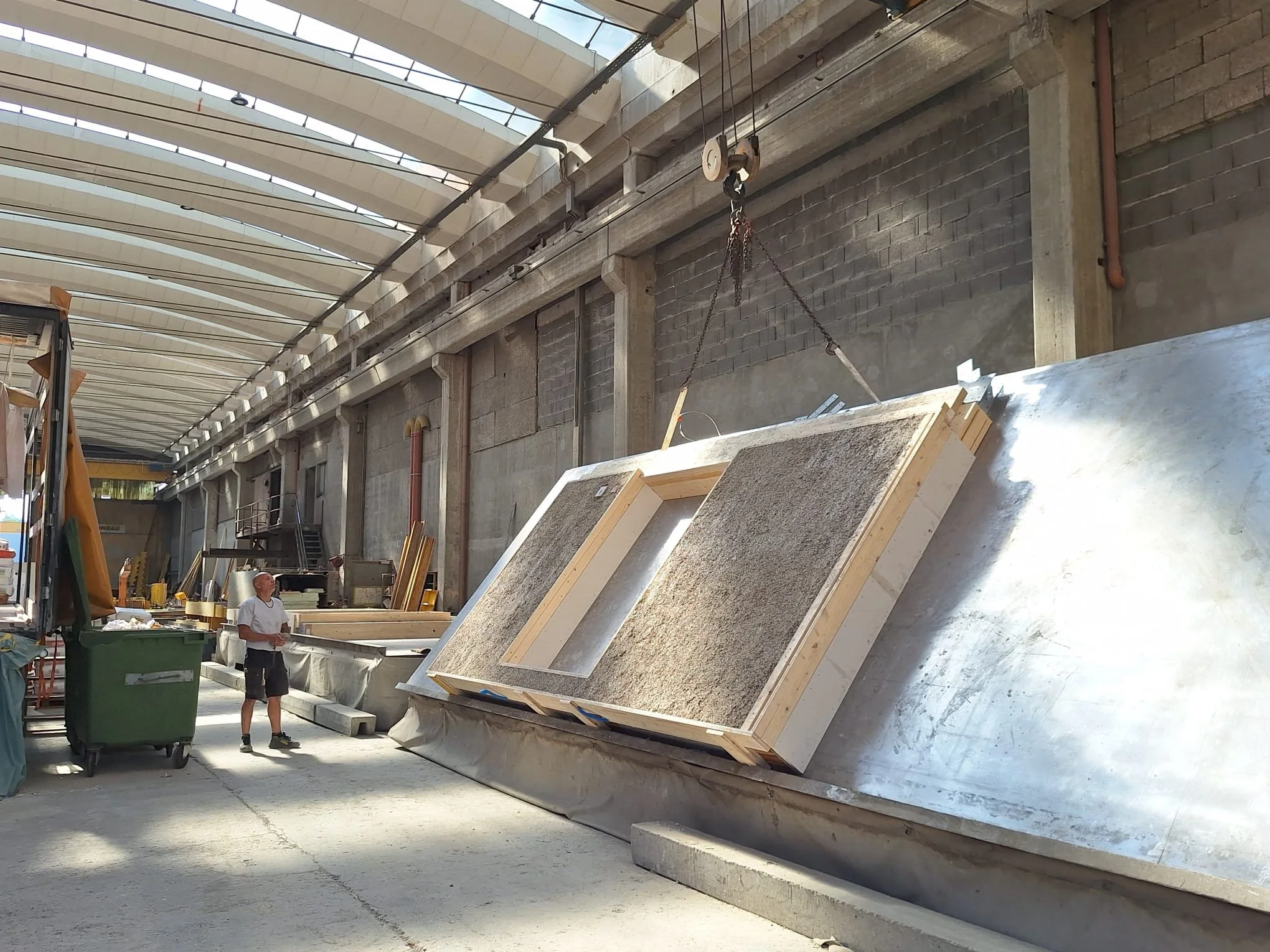
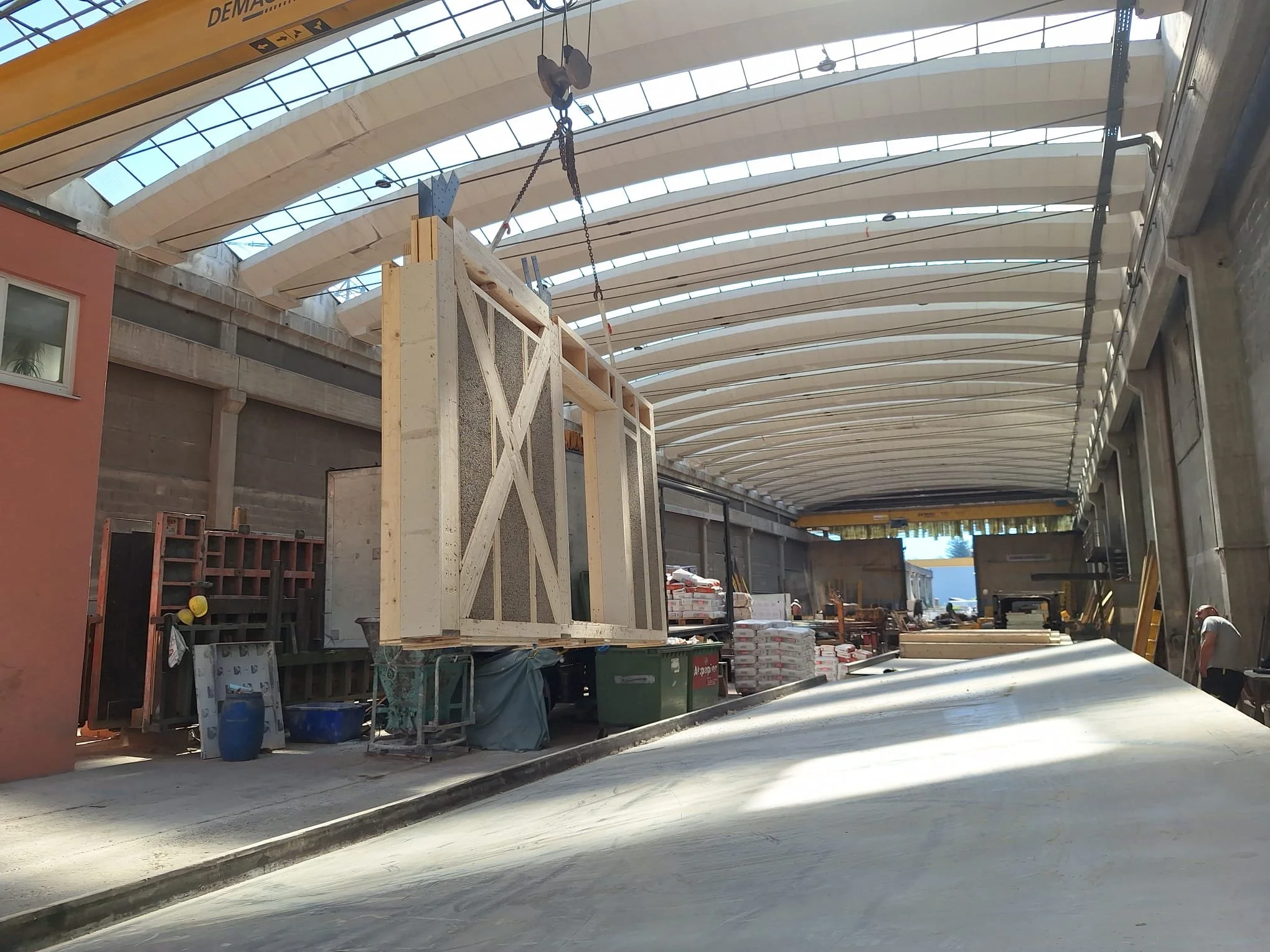
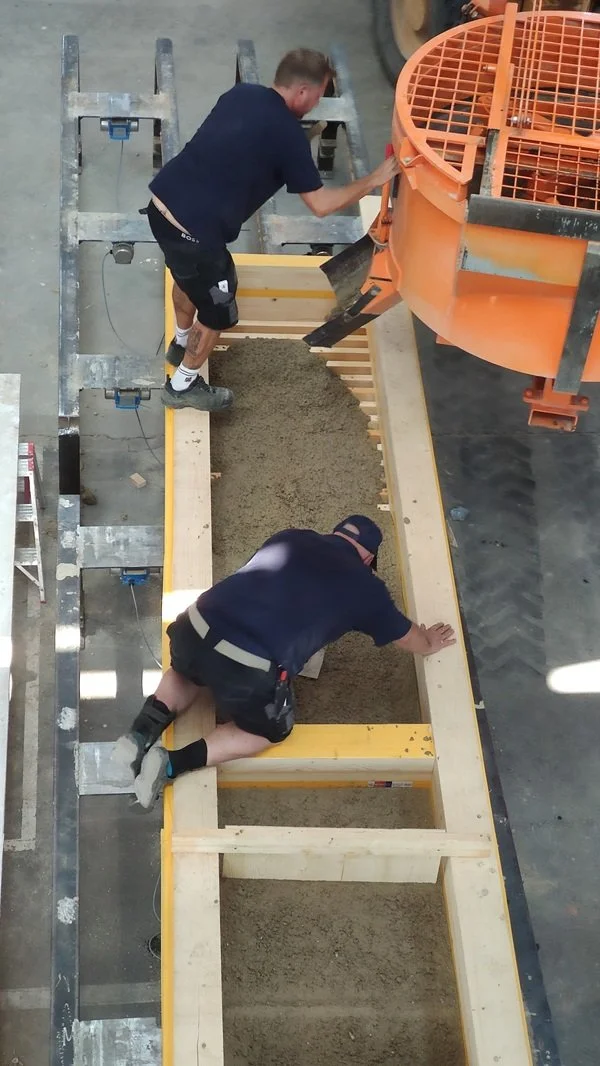
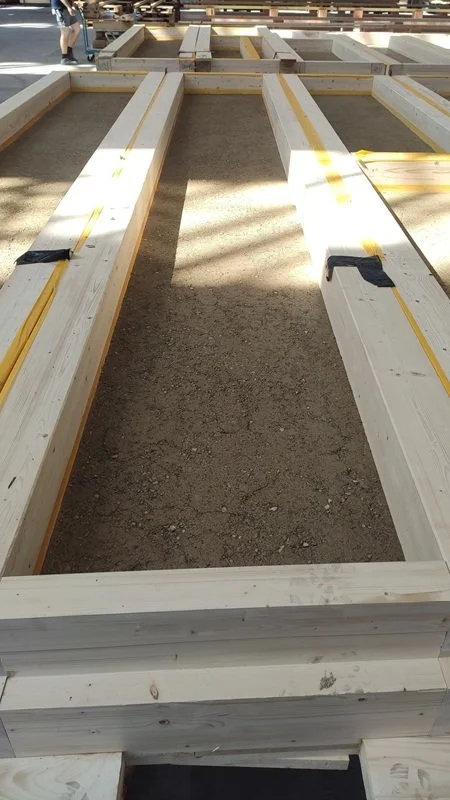
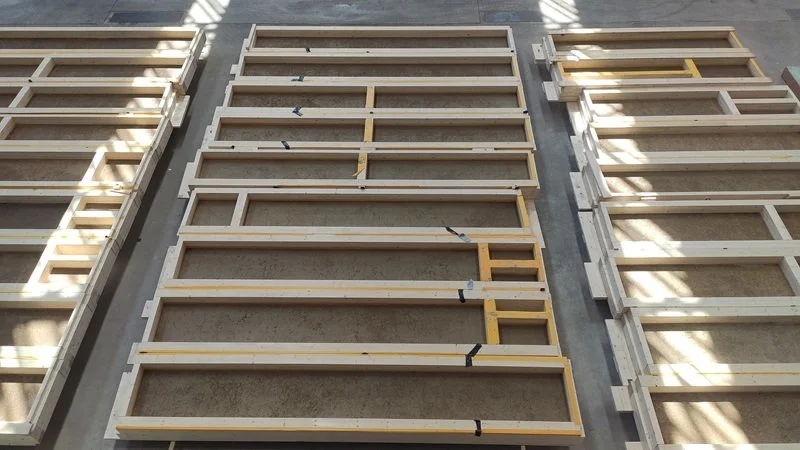
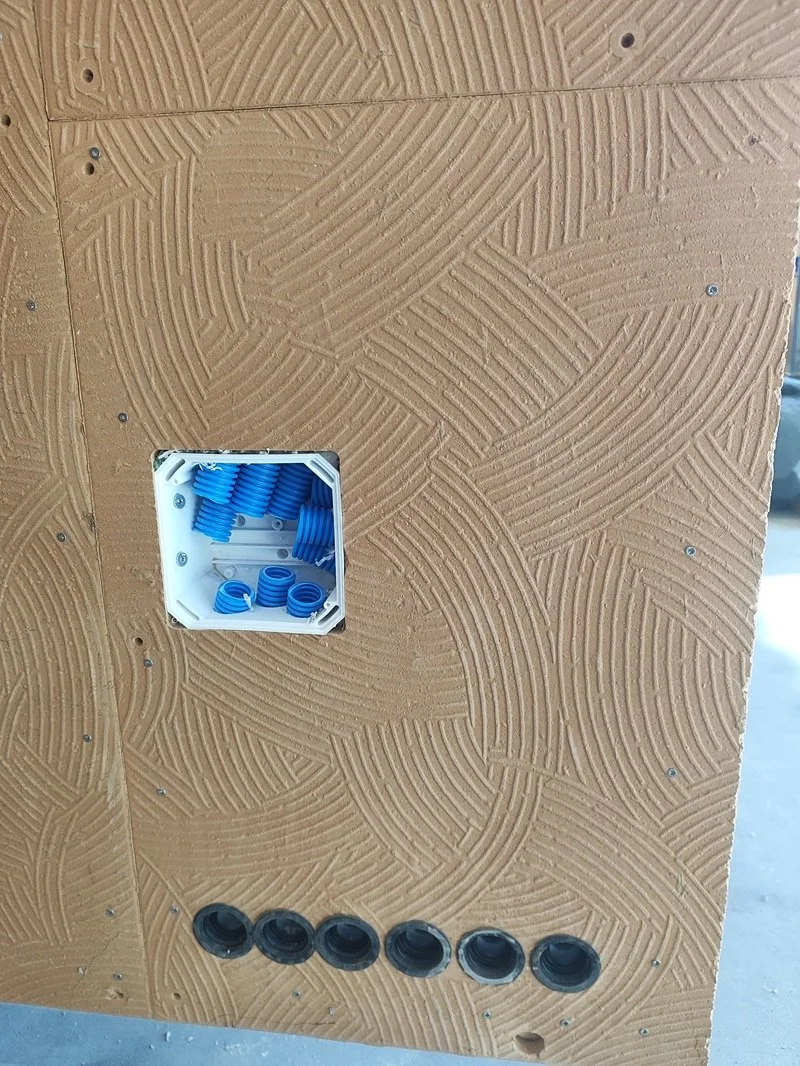
Serial prefabrication of exterior walls on Cancret Materials’ new production lineClay: new Cancret LBD 1 ceiling system with clay on the underside. Cost-neutral compared to the box-girder ceiling used in Phase 1
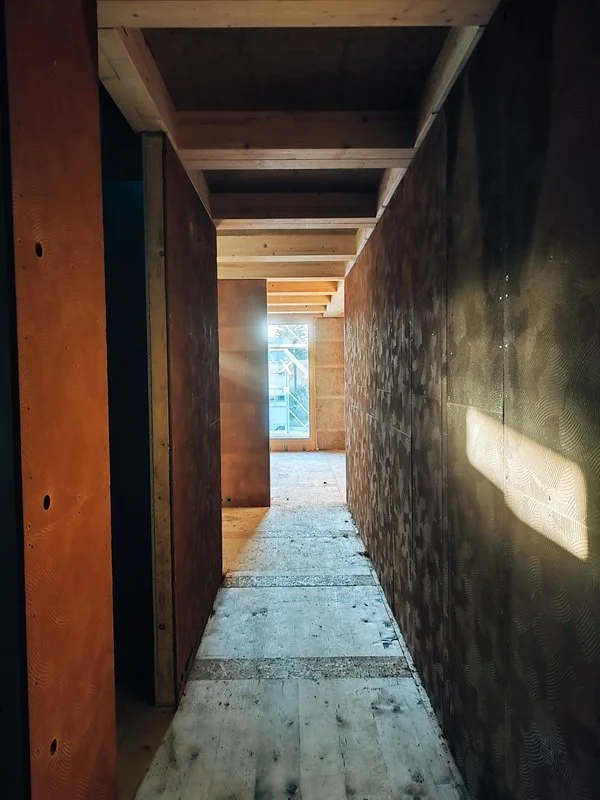
Clay interior walls , a new drywall system featuring a 12.5-mm clay building board (available from Cancret Materials).
Eco-Concrete vs. Biochar: Concrete with the same net CO2 footprint and half the cost.
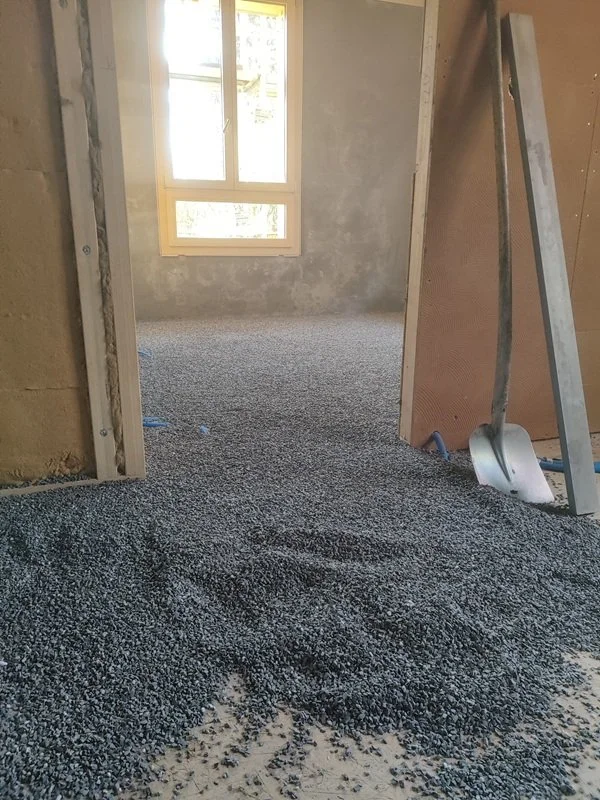
Solar-powered cooling system in floors and clay ceilings
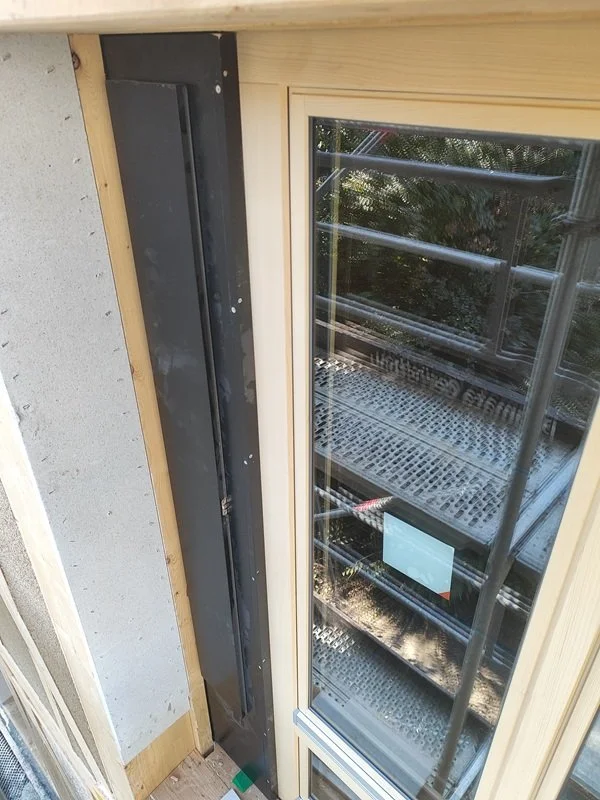
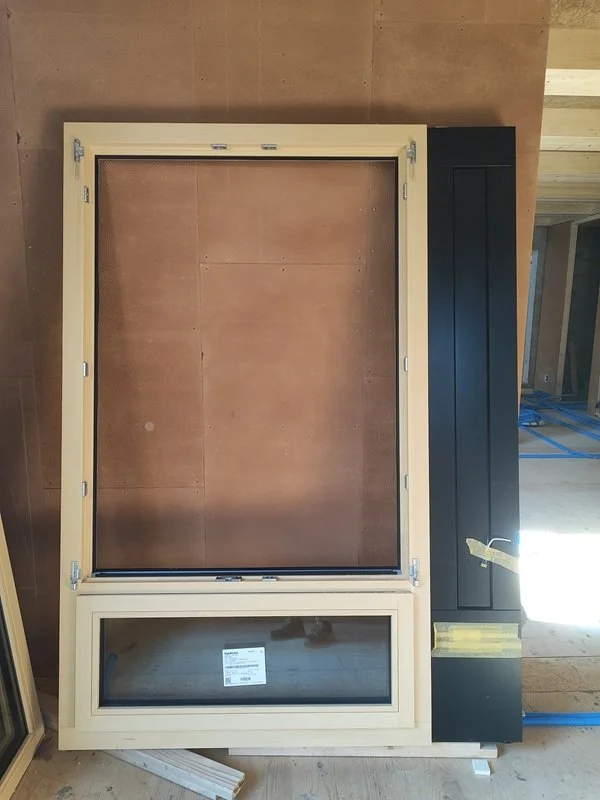
Solar Slide - New shading system using PV panels (product developed in collaboration with EHRET)
Through consistent refinement and industrialization of our construction system, Phase 2 achieves construction costs of 925 CHF/m3.
Openly Valley Widnau II was developed by:
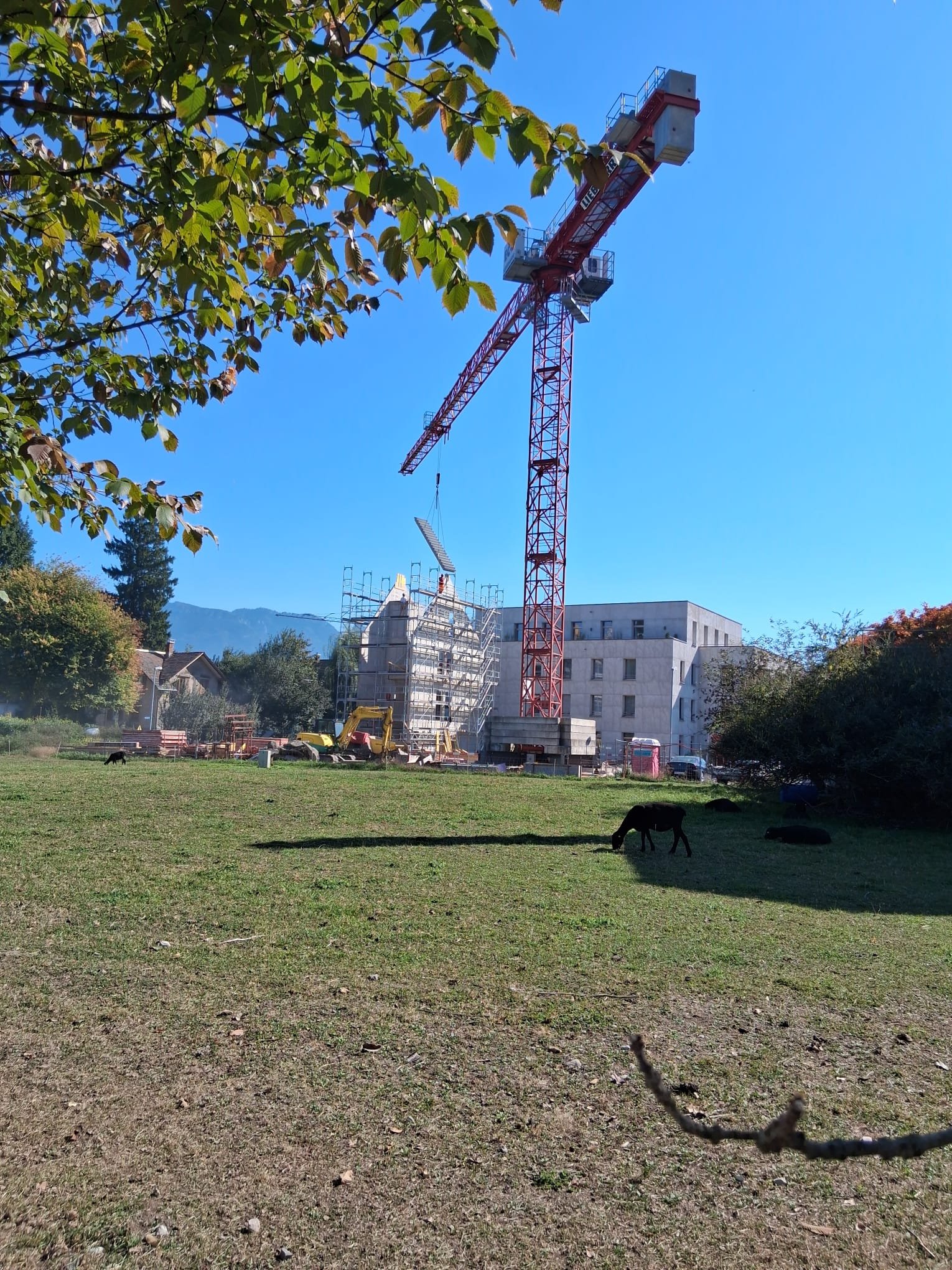
Over 300 visitors since the topping-out ceremony on October 26
Openly remains openly
We continue to openly share all components (see the photo gallery above) and their technical documentation to promote the adoption and scaling of sustainable construction.
Detailed materials are available for download in our building system documentation. Or visit our OPENLY LAB: In 13 events to date, more than 100 architects and project developers have already learned about our building system and received training on how to use it.
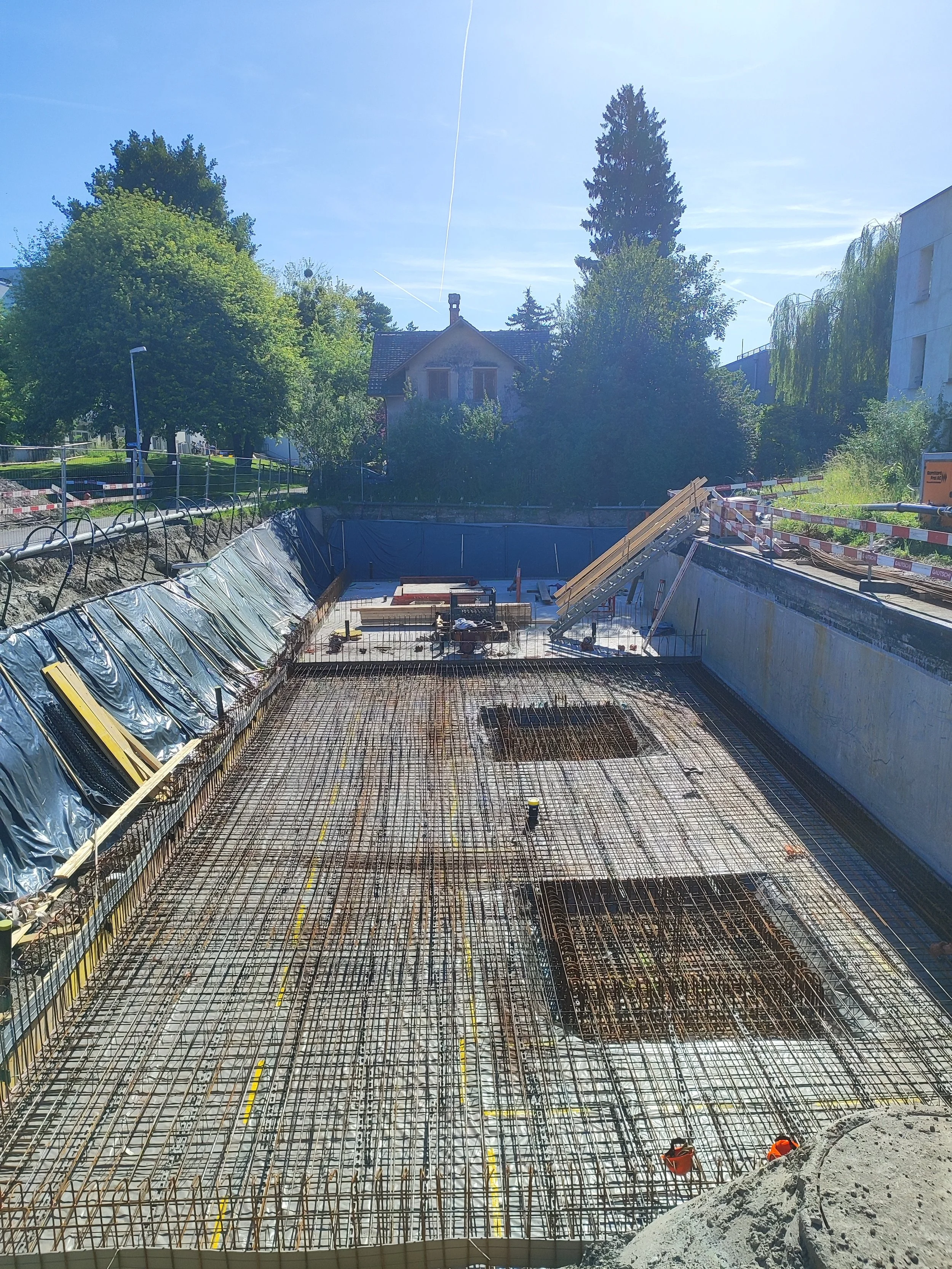
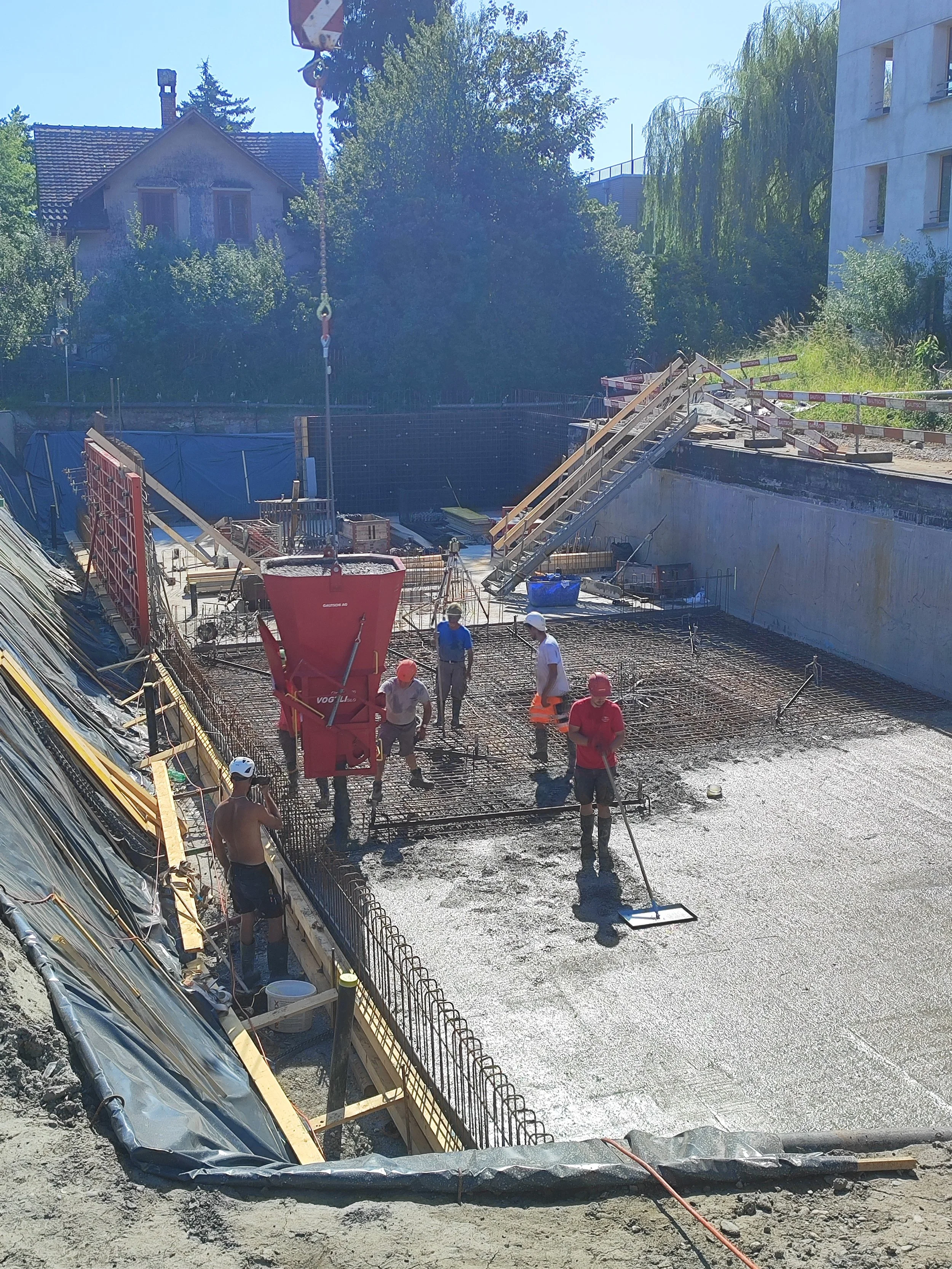
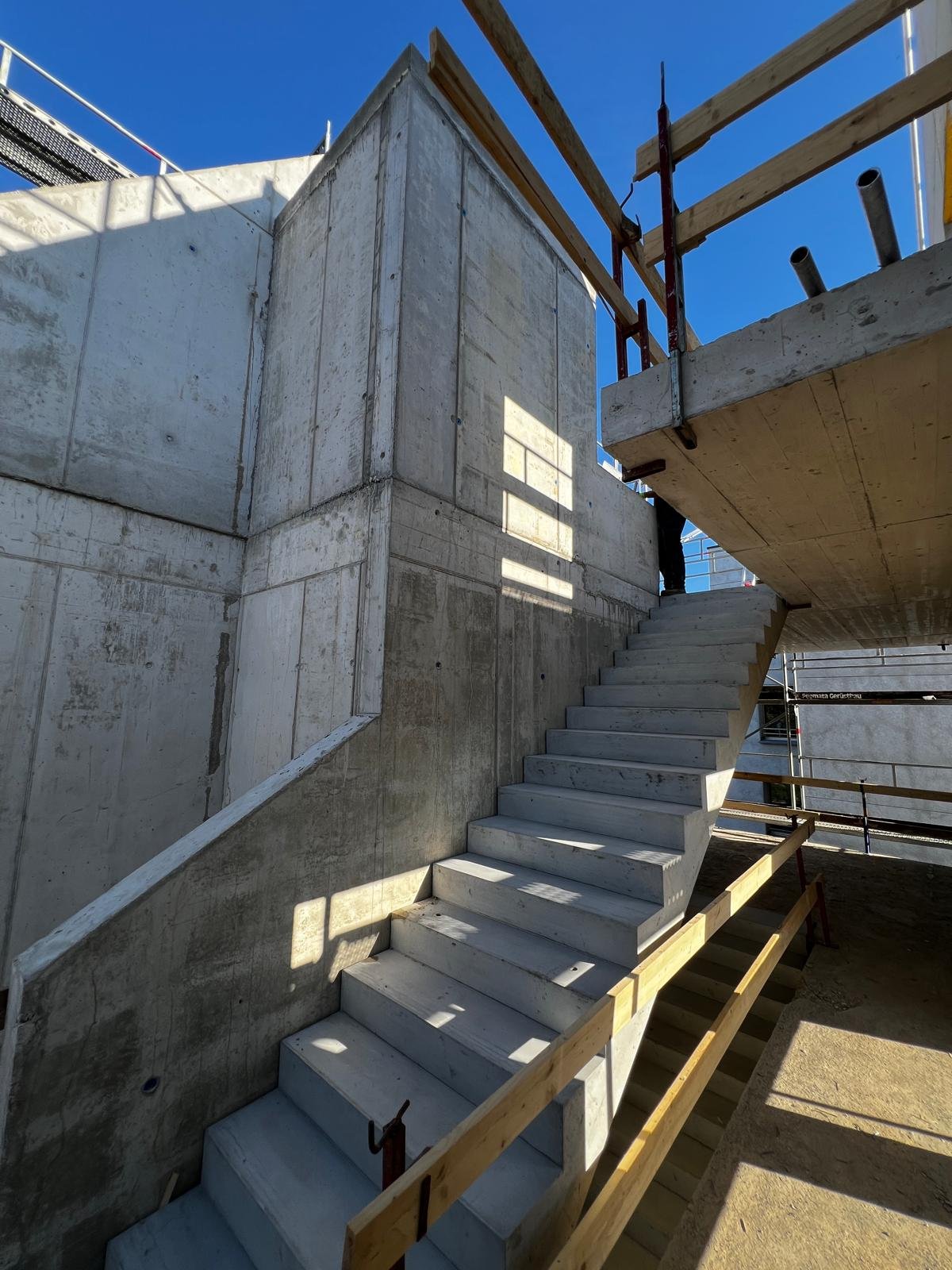
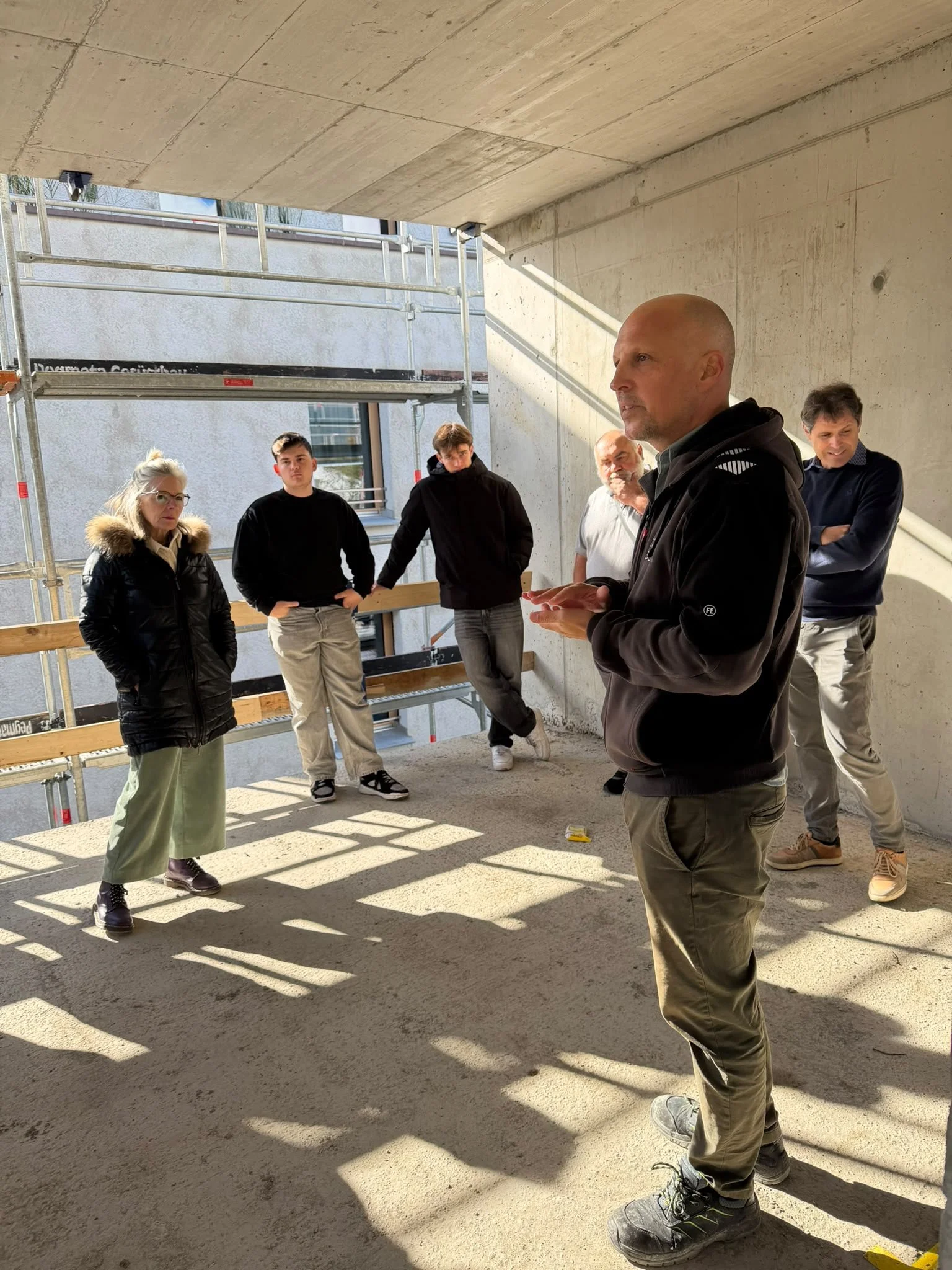
Basement & Stairwell Core: Concrete, of Course
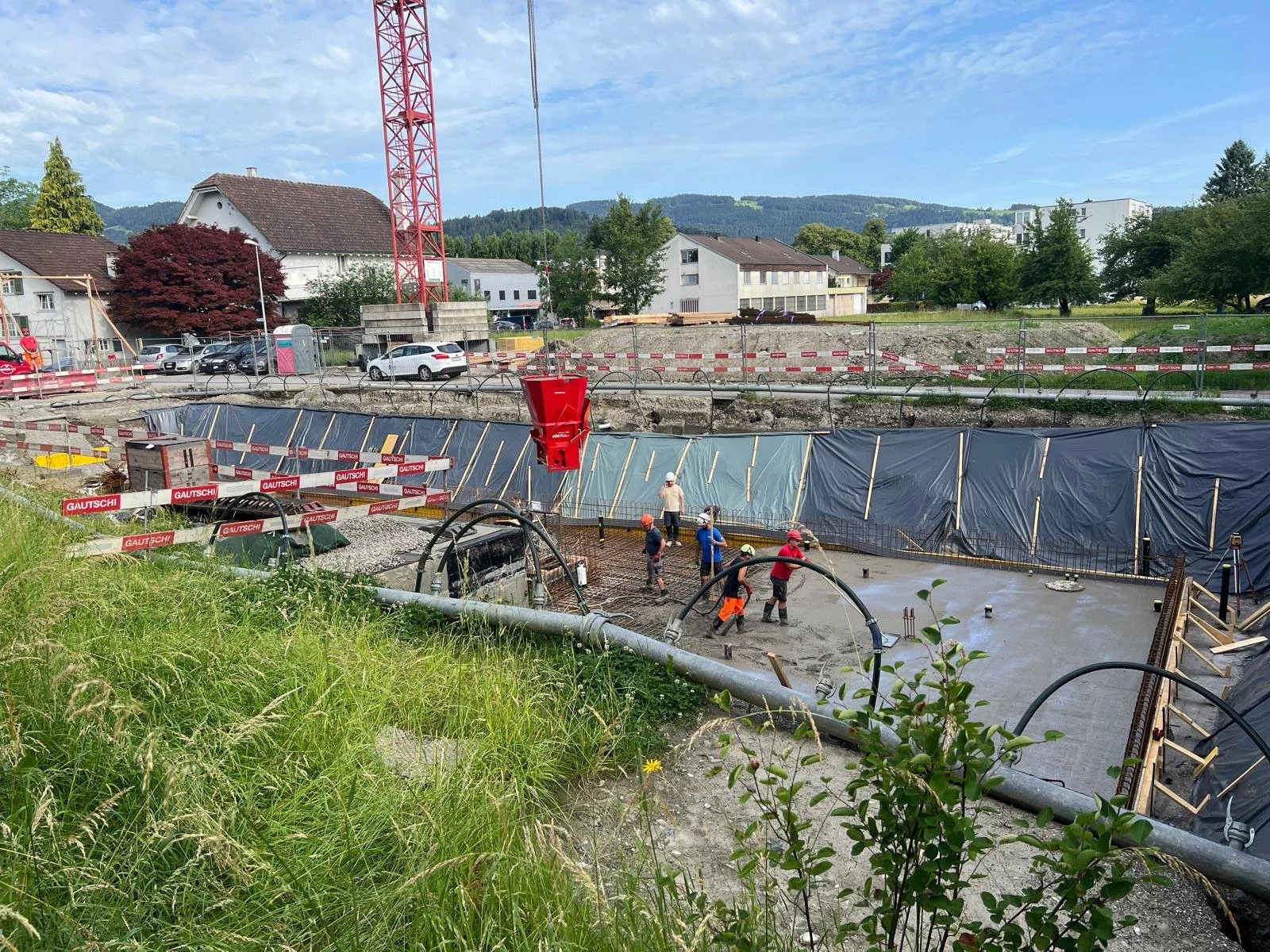
Pouring the floor slab: The mix, which included CO₂-reduced cement from Holcim Eco Planet, was supplied by network partner Sigmund Sieber AG specially adapted for this application and placed by Gautschi AG .
A “white tub” is almost impossible to make without concrete. From Openly’s perspective, however, traditional concrete—as an emission-intensive material—is precisely the product we want to reduce as much as possible. The solution: low-carbon cement (Holcim Eco Planet). However, this cement behaves very differently from conventional concrete during processing—the mixture is more viscous and requires a different consistency during preparation.