
Building sustainably is not a matter of values
Many of the discussions I have with high-profile interlocutors—such as Johannes Eisenhut (Senn) or Dr. Peter Wuffli (Elea Foundation)—about regenerative construction eventually turn into a discussion of values.
Sustainability is a matter of personal priorities. One person may place greater emphasis on returns, another on architecture, and yet another on CO₂ or social responsibility.
The motto is: free from dogma.
I think this premise is wrong to begin with.
Because anyone who turns this into a discussion about values automatically assumes that someone else might have different values. That sustainable buildings are just one possible stance among many. A preference. Perhaps even a worldview that puts you in the same boat as Greta Thunberg.
Long read by Andy Keel:
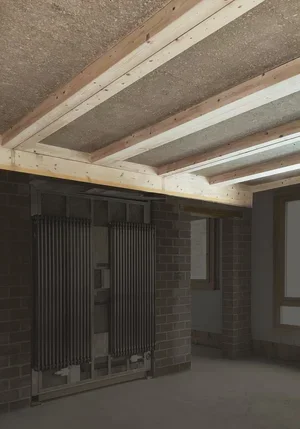
LBD-1 Solid Clay-Wood Floor by Cancret Materials
Why should a building consume more energy when it can generate its own? Why should it emit CO₂ when we can permanently store some of it? Why should we use finite raw materials when renewable materials can serve the same purpose? Why should people live in inferior indoor environments when we can build healthier ones?
These aren't moral questions at first glance. They're questions about which solution is better.
And this is precisely where the next misunderstanding crops up in many conversations: My conversation partner then says, in essence: “I have absolutely no preconceptions (reservations) about wood, hemp, clay, or other biogenic building materials.” “I’m no expert. That’s why I hire architects and engineers. They run the numbers and tell me what’s right.” That sounds completely rational and open-minded. But that’s precisely where the next stigma lies. Because
Our professional community does not operate in a neutral space
Architects and engineers work with codes, databases, calculation methods, standards, and established construction practices. These tools are necessary. But we shouldn't pretend that they merely reflect an objective reality. What we measure and how we measure it influences what we build.
KBOB, ÖKOBAUDAT, and other established databases provide key environmental metrics . At the same time, such systems inevitably exert a steering effect. System boundaries, lifespans, replacement cycles, allocations, credits, and the treatment of biogenic carbon sequestration all play a role in determining whether a building component looks good or bad on paper.
This can lead to results that contradict our intuitive understanding of sustainability. In a particular calculation, a plastic window may suddenly appear more sustainable than a wooden window—not because plastic is a more sustainable material, but because the calculation model has defined which properties count within which system boundaries.
A standard or database is not a law of nature.
And a life cycle assessment is not a complete description of reality. It is a model of that reality—indispensable, but dependent on assumptions, system boundaries, and the question of which effects we choose to consider at all.
That is exactly why we must be careful not to optimizeour buildings ( and building materials) for our evaluation methods, rather than optimizing our evaluation methods for better buildings.
The crucial question is not whether we want to build in a more environmentally friendly way. The question is much more fundamental:
What do we leave behind after we've built something?
Sustainability was an important step. But sustainability is, at its core, defensive; in technical terms, we describe it as “sufficiency.” Less energy. Less CO₂. Less material. Less waste. Less damage. That was necessary. But “less bad” is still not good enough.
Regenerative construction turns the perspective on its head.
It doesn’t just seek to reduce a building’s negative environmental footprint. It asks what positive contribution a building can make. We’re building anyway. We’re moving thousands of metric tons of material. We’re investing millions. We’re transforming landscapes and cities. We’re creating structures that will last for several generations. Why should the goal of such a massive undertaking be merely to cause as little harm as possible?
A regenerative building can generate more energy than its occupants consume. It can permanently store carbon in its materials. It can be built using renewable resources. It can use materials in such a way that they can be reused later. It can retain water, promote biodiversity, and enhance a place rather than merely occupy it. And regeneration doesn’t stop at the building envelope; it also affects people.
We spend a huge portion of our lives inside buildings. Yet we often treat interior spaces as mere technical considerations: surfaces, ventilation, temperature, acoustics, and lighting.
Yet it is precisely this space that determines how we feel every day. Natural materials, good air quality, balanced humidity, natural light, comfortable surface temperatures, good acoustics, and a stable indoor climate can create spaces where people feel more comfortable and can live healthy lives.
Clay and hemp can help regulate humidity. Wood and other natural materials create different surfaces and atmospheres than an interior composed entirely of mineral and synthetic materials. A well-designed building envelope protects against heat and cold. Natural light and well-thought-out floor plans influence our daily well-being. A building should not only have a lower environmental impact; it should also be good for the people inside it.
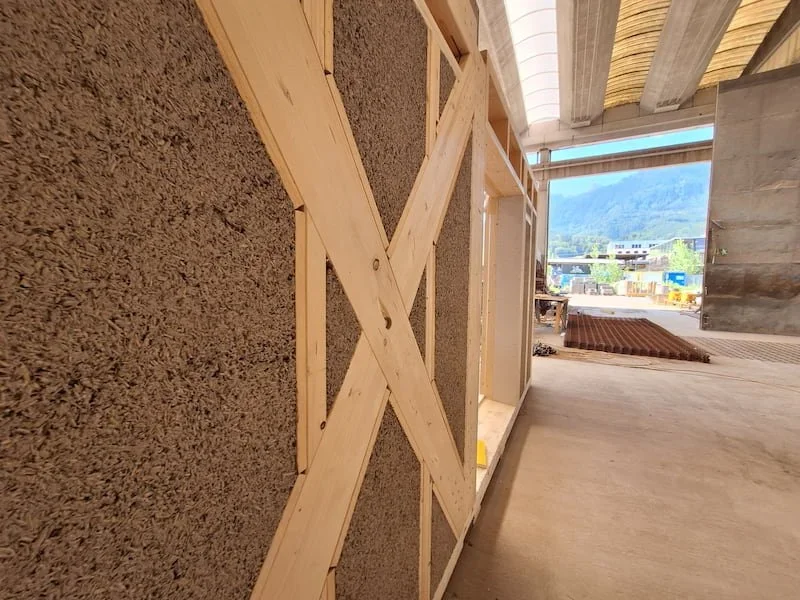
Hemp-Lime Exterior Wall by Cancret Materials
And then there's the economy.
Regeneration can only work in the long term if it makes economic sense. A building that is ecologically outstanding but unaffordable will not create a “new normal” (we have the “idiot factor” for biogenic building materials to describe this).
That is why ecology, health, architecture, and economic viability go hand in hand—not as four competing goals, but as a single system. Openly is working toward cost neutrality in “building differently.”
A building that requires little energy and generates its own. A building that stores CO₂ rather than just emitting it. A building constructed from durable and recyclable materials. A building that can adapt to changing uses and a changing climate (see Openly Phase 2 on Climate Resilience). A place where people enjoy living healthy lives. And one that simultaneously creates long-term economic value.
This is not a green ideology. This is not a dogma.
It's actually amazing that we ever built things any other way.
Perhaps that is why “net zero” isn’t the ultimate goal either. “Zero” simply means that, in the end, we’ve caused as little additional damage as possible. The more interesting question is:
Why stop at zero?
If we’re going to build anyway, we might as well generate energy, store carbon, create habitats, promote health, improve communities, and create value. Then a building becomes more than just a piece of real estate. It becomes part of a system that gives back more than it takes. To me, that’s regenerative building: from consumption to contribution. From reduction to improvement.
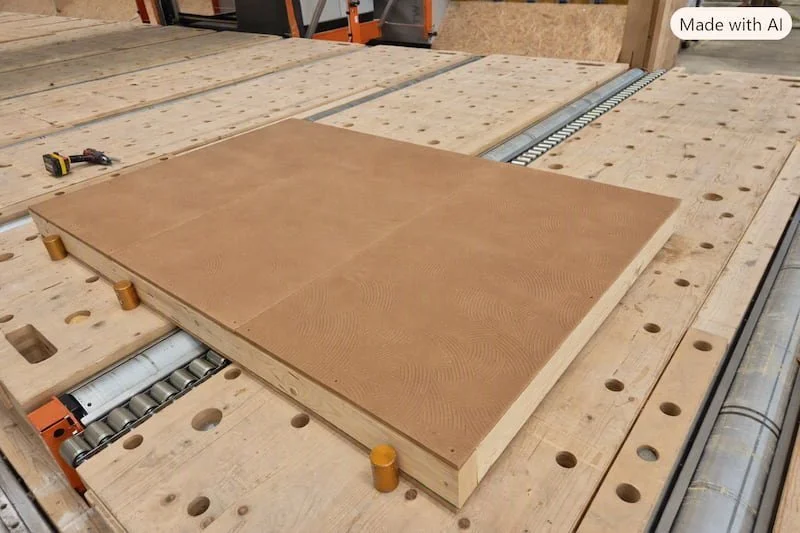
LBW1 Clay-Based Drywall Interior Wall by Cancret Materials, fully renewable